Big Cats Conservation in India Strategy, Practice and Impact
Hemanth Kumar
In the 21st century, conservation is no longer just about protecting wildlife, it is about restoring balance between humans and nature. Today, India stands as an epicentre of a global ecological revival. Across diverse landscapes, from the icy Himalayas to dense forests, the country is witnessing the revival of its most iconic apex predators. This is not accidental; it is the result of sustained efforts that combine science, governance, and community participation into a unified national mission. Through initiatives such as Project Tiger, Project Lion, the Cheetah reintroduction programme and other large-scale conservation programmes, India has moved beyond fragmented efforts to create a model where ecological restoration is both measurable and scalable.
This leadership will be further reflected at the upcoming IBCA Summit 2026, to be held in India on 1–2 June 2026 under the framework of the International Big Cat Alliance. The summit will stand as a landmark in conservation history, showcasing India’s role in safeguarding the world’s most iconic predators and the ecosystems they inhabit. By hosting this summit, India is not only celebrating its own revival of big cats but also inviting the world to join in a shared guardianship of biodiversity. The summit will be more than a conference; it will be a collective pledge to secure the future of apex predators and the health of our planet.
Snow-Capped Peaks of Ladakh, India
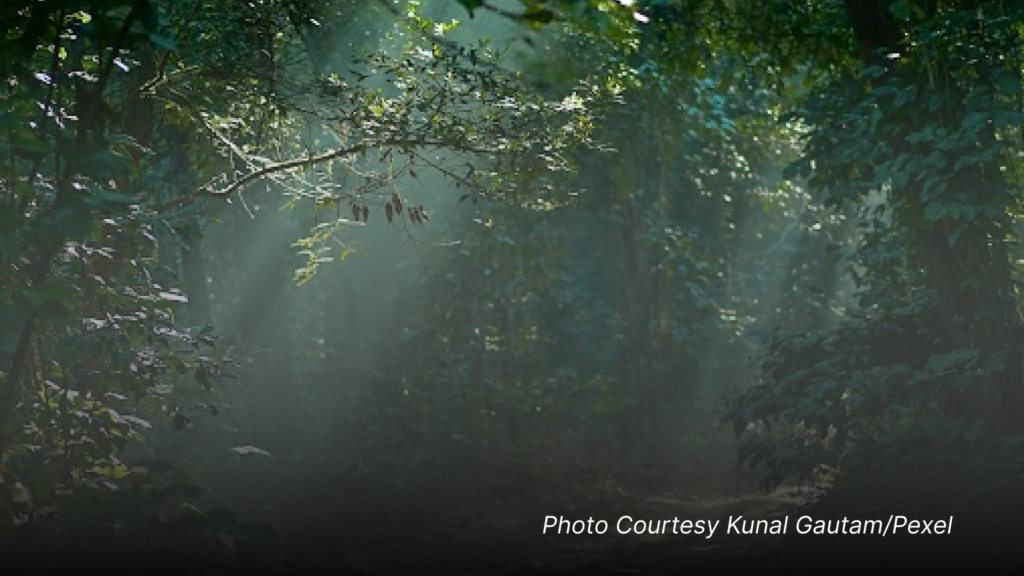
Dense Forest, Nelliampathi, Kerala, India
🌐 National Models, International Frameworks
India’s big cat conservation is not limited to species protection; it reflects a broader shift towards integrated and collaborative conservation systems. Across landscapes, from the Himalayas to forest ecosystems, different species require different strategies. Yet these efforts are connected through a common approach: coexistence, scientific management, and multi-stakeholder collaboration.
As these approaches expand across landscapes and species, they also begin to extend beyond national boundaries. Many big cats, such as snow leopards, range across countries, making conservation a shared responsibility between nations. This has led to greater cooperation, where countries exchange knowledge, align strategies, and work together to protect interconnected ecosystems.
India’s experience in combining policy, science, and community participation, is increasingly contributing to global platforms and partnerships. This is reflected in initiatives like International Big Cat Alliance, which brings together countries for coordinated conservation of big cats through knowledge exchange, capacity building, and financial support mechanisms. At the same time, transboundary efforts such as the Global Snow Leopard and Ecosystem Protection Program (GSLEP) demonstrate how India collaborates with other Himalayan nations to monitor populations, manage shared habitats, and align conservation strategies across borders. Together, these efforts reflect how national conservation models are being scaled into structured international cooperation frameworks, strengthening global biodiversity outcomes.
Species Diversity in Ecological Zones
India’s significance in global big cat conservation is supported by both species’ diversity and population scale.
The country currently supports:
~3,682 wild tigers, accounting for nearly 70% of the global population (NTCA,
718 snow leopards, based on the first nationwide scientific assessment (SPAI, 2019–2023)
Over 13,000 leopards across varied landscapes
As of 2025, the Asiatic lion population in India stands at 891
In addition, India is the only country where multiple big cat species occupy distinct ecological zones simultaneously:
Tigers in tropical and subtropical forests
Snow leopards in high-altitude alpine ecosystems
Lions in dry deciduous habitats
Leopards across forested and human-dominated landscapes
Such scale and diversity position make India as a critical global stronghold for big cat conservation, with implications not only for species survival but also for ecosystem stability and biodiversity conservation at a landscape level.
Conservation Practices of 5 Big Cats
India’s conservation strategies are not uniform. They adapt to the ecological and social realities of each species and landscape. The five big cats together illustrate how different approaches are applied within a unified framework.
Snow Leopard (Panthera uncia)
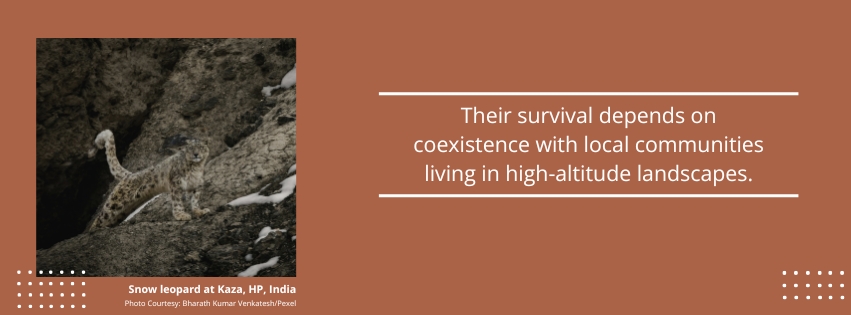
The snow leopard inhabits the fragile ecosystems of the Himalayas, often referred to as the “Third Pole” due to their importance for global water systems. For decades, conservation efforts were limited by lack of data and the remoteness of its habitat. This changed with India’s first scientific assessment (SPAI, 2019–2023), which estimated around 718 individuals, marking a shift towards evidence-based conservation. Unlike other big cats, snow leopards cannot be protected through strict isolation. Their survival depends on coexistence with local communities living in high-altitude landscapes.
Key strategies include expanding conservation beyond protected areas to entire landscapes, enabling community stewardship through livestock protection measures and eco-tourism, and strengthening transboundary cooperation across Himalayan nations. This approach reflects a broader conservation principle: integrating people, livelihoods, and ecosystems into a single system.
Tiger (Panthera tigris)
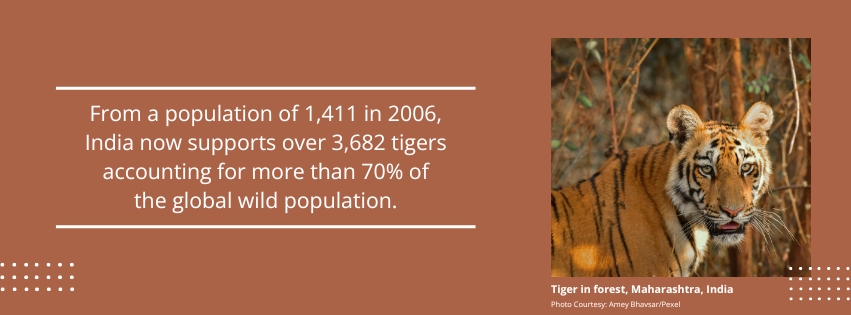
The tiger represents one of the most successful conservation recoveries globally. From a population of 1,411 in 2006, India now supports over 3,682 tigers accounting for more than 70% of the global wild population.
This recovery is anchored in a structured conservation framework supported by strong policy and scientific systems. It has been driven by the expansion of protected areas through tiger reserves, the use of scientific monitoring tools such as camera traps and digital technologies like M-Stripes, and robust institutional mechanisms including the National Tiger Conservation Authority. Alongside this, managed relocation and conflict mitigation strategies have helped balance conservation goals with human needs.
India’s tiger conservation demonstrates how political commitment, science, and governance can deliver measurable outcomes even in densely populated landscapes. However, this success also brings new challenges. Habitat fragmentation due to expanding infrastructure is disrupting critical corridors, while increasing tiger populations have intensified human–tiger conflict in shared landscapes. At the same time, maintaining landscape connectivity has become essential to ensure genetic flow and long-term resilience across reserves.
Lion (Panthera leo)
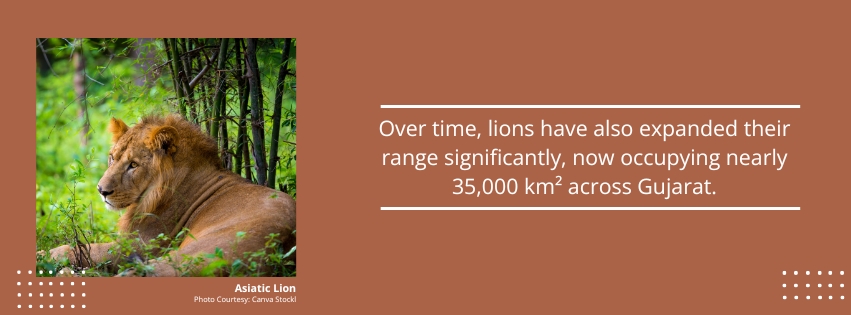
The Asiatic lion conservation represents a distinct conservation model, where revival is rooted in coexistence within human-dominated landscapes. The Asiatic lion’s story is one of resilience against extinction and a powerful example of cultural coexistence. Once reduced to just 18 individuals in the late 19th century, the population has rebounded to over 891 today, with Gir and its surrounding landscapes remaining the last stronghold of this subspecies. Over time, lions have also expanded their range significantly, now occupying nearly 35,000 km² across Gujarat.
This conservation rests on a combination of habitat protection and strong community tolerance, where local populations have historically coexisted with lions. Unlike many other large carnivores, lions in India continue to survive in shared landscapes, supported by cultural attitudes that enable coexistence.
However, challenges remain. The population’s origin from a small founder base raises concerns around genetic bottlenecks, while its concentration in a single region increases vulnerability to disease and ecological shocks. The Asiatic lion stands as a strong example of coexistence-based conservation, but its long-term survival will depend on expanding populations beyond Gir and strengthening conservation at a broader scale.
Cheetah (Acinonyx jubatus)
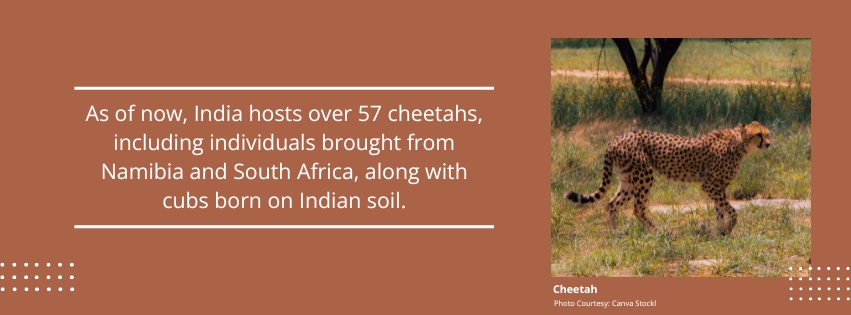
The return of the cheetah to India marks a significant step in ecological restoration. Declared extinct in India in 1952, the species was reintroduced in 2022 after more than seven decades, reflecting a bold conservation effort aimed at restoring lost ecological functions within grassland ecosystems. As of now, India hosts over 57 cheetahs, including individuals brought from Namibia and South Africa, along with cubs born on Indian soil. This revival is rooted in international collaboration, scientific planning, and adaptive management. The programme involves habitat restoration, monitoring of introduced individuals, and continuous learning to refine conservation strategies.
However, the process remains complex. Challenges include ensuring habitat suitability, managing survival and adaptation in a new environment, and maintaining long-term ecological balance. The cheetah programme therefore represents not just species recovery, but an evolving experiment in rewilding and restoration.
Leopard (Panthera pardus)
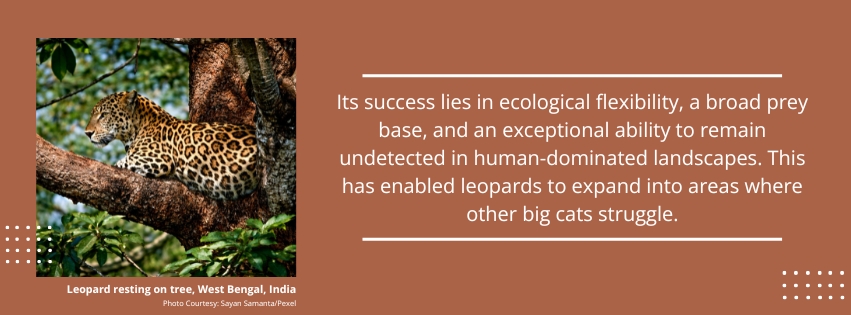
With an estimated 13,874 individuals, the leopard is India’s most widely distributed big cat, thriving across forests, agricultural lands, and urban fringes.
Its success lies in ecological flexibility, a broad prey base, and an exceptional ability to remain undetected in human-dominated landscapes. This has enabled leopards to expand into areas where other big cats struggle.
However, this adaptability also places them at the centre of human–wildlife conflict, with increasing encounters in villages and farmlands. Their story reflects a paradox, high ecological success alongside rising conflict. The leopard’s survival depends on coexistence across shared landscapes, supported by ecological resilience and community tolerance. Yet challenges remain in managing conflict, addressing habitat fragmentation, and overcoming perception gaps.
A Model for the Future
India’s big cats are no longer just indicators of biodiversity; they represent a larger transformation in how conservation is approached. Across species and landscapes, a common pattern emerges:
Integration of science, policy, and community
Shift from protection to coexistence
Expansion from national efforts to global collaboration
This blog is based on original article written by Mr. Hemanth Kumar. The views expressed are those of the author. Data cited from the article entitled “Five Faces of India’s Big Cats: A Charter of Wildlife Diplomacy”
Hemanth Kumar is a retired Indian Forest Service (IFS) officer and served as Principal Chief Conservator of Forests (PCCF), Uttar Pradesh. Currently, he is a special monitor, tribals at the National Human Rights Commission (NHRC).