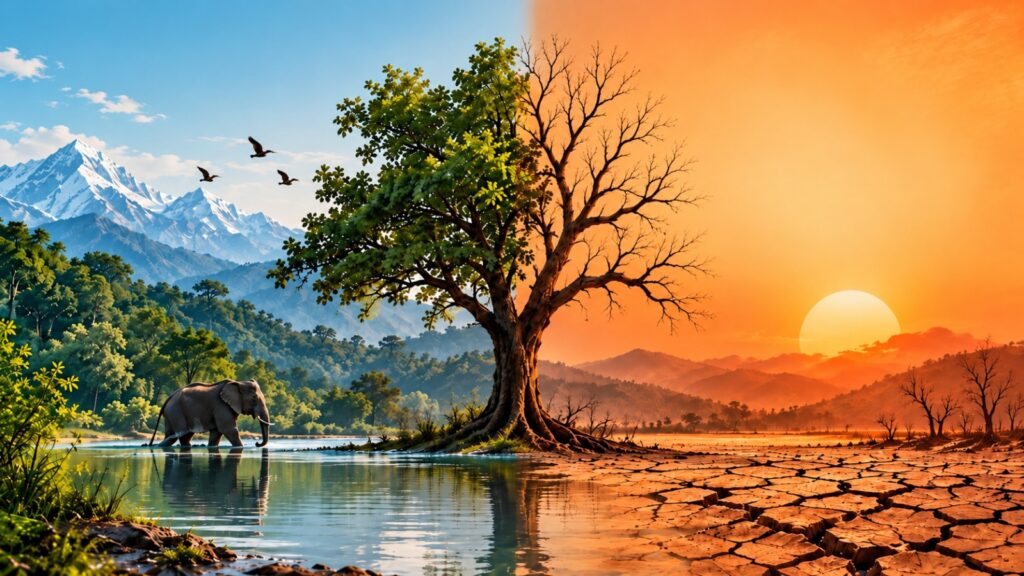
Climate change is not just altering India’s landscapes; it is changing the conditions wildlife needs to survive, adapt and thrive.
Climate change is transforming natural habitats and creating growing challenges for India’s wildlife
India occupies only 2.4% of the world’s land area but supports nearly 7-8% of the world’s recorded species, making it one of the 17 recognized megadiverse countries. The country harbours more than 45,000 plant species and over 91,000 animal species distributed across diverse ecosystems including forests, grasslands, deserts, wetlands, coastal regions, and marine habitats. Four global biodiversity hotspots, namely the Himalayas, Western Ghats, Indo-Burma region of Northeast India, and the Nicobar Islands, are located within the country. These ecosystems provide essential ecological services such as carbon sequestration, watershed protection, soil conservation, pollination, and climate regulation.
Moreover, climate change often compounds existing pressures such as habitat fragmentation, pollution, overexploitation of natural resources and expanding human settlements, making wildlife conservation increasingly challenging.
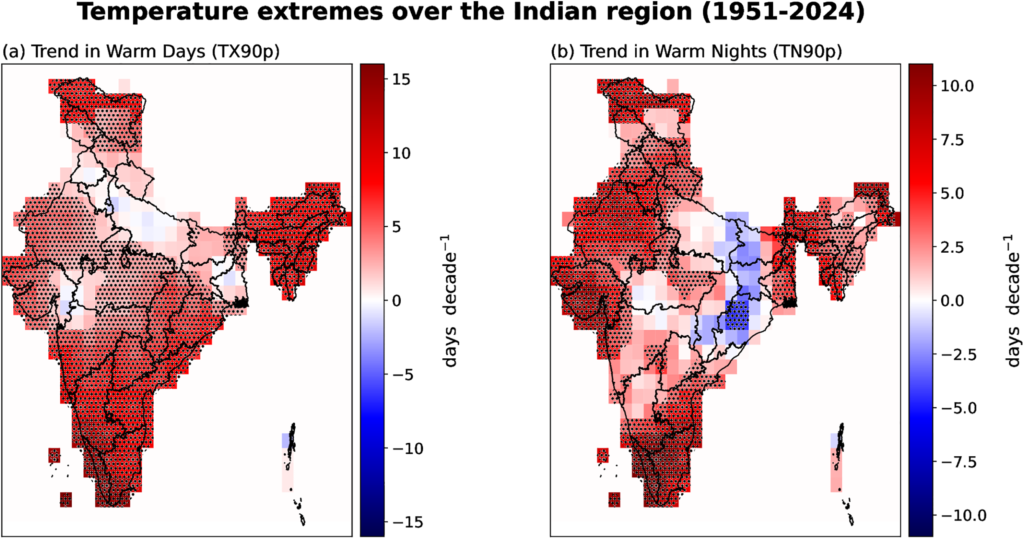
Mountain forests are particularly susceptible because temperature changes tend to be greater at higher elevations. Alterations in forest composition can have cascading effects on wildlife dependent on specific vegetation types, reducing habitat suitability and increasing extinction risk for specialist species.
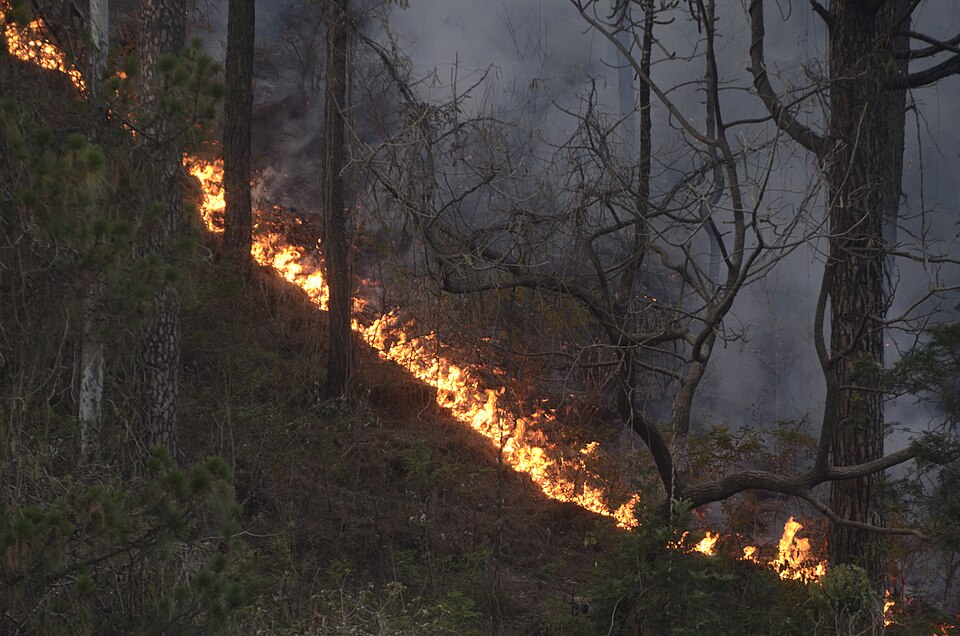
At the same time, climate-induced increases in forest fires are expected to further degrade habitats. Prolonged dry periods and rising temperatures create favorable conditions for more frequent and intense fires, leading to loss of biodiversity and ecosystem productivity.
Forest fire in uttarkhashi Photo Courtesy: PJeganathan/Wikimedia Commons
The consequences of this accelerated warming are already becoming evident. Alpine plant communities are shifting to higher elevations, leading to a gradual contraction of available habitat. Species adapted to cold environments may eventually have no suitable habitat left as they are pushed toward mountain summits.
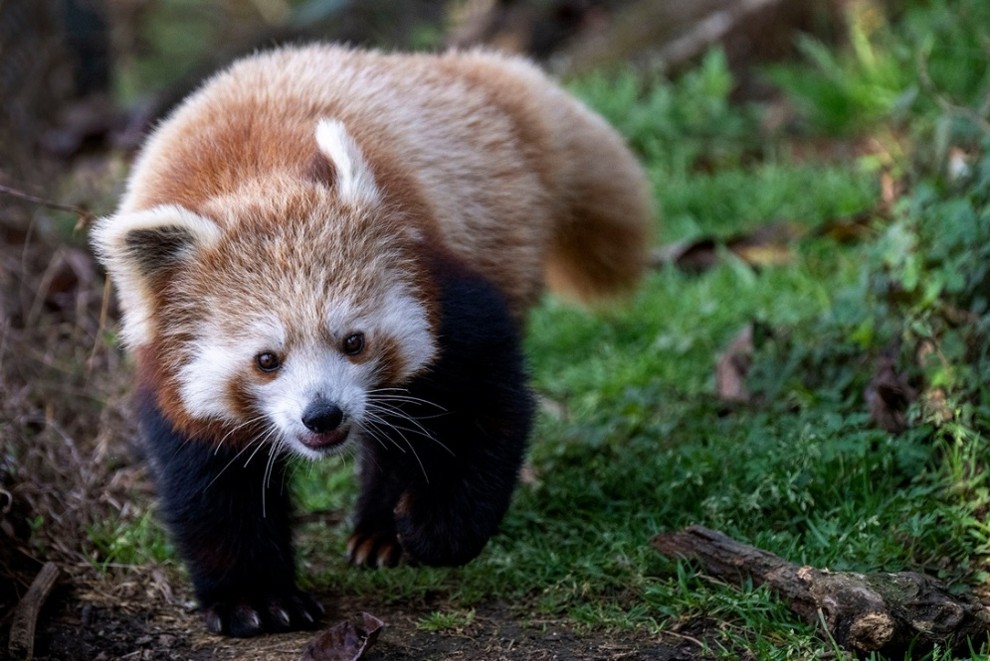
Several iconic Himalayan species face increasing threats from climate change. The Snow Leopard (Panthera uncia), Red Panda (Ailurus fulgens), Hangul (Cervus hanglu hanglu), Himalayan musk deer (Moschus leucogaster), Himalayan tahr (Hemitragus jemlahicus), and various pheasant species are expected to experience habitat shifts and population declines. Treeline advancement into alpine meadows can alter forage availability and change predator-prey dynamics. Additionally, glacial retreat affects freshwater availability and riparian ecosystems that support diverse wildlife communities.
Red Panda (Ailurus fulgens) in Singalila National Park, West Bengal, India Photo Courtesy: Dr Sanjay Kumar Shukla
Furthermore, altered rainfall patterns may affect amphibian diversity in the Western Ghats, which harbours one of the world’s richest assemblages of endemic amphibian species. Since many amphibians are highly sensitive to temperature and moisture changes, they are often regarded as important indicators of climate-induced ecological change.
Coastal and Marine Ecosystems Under Threat
India’s coastal ecosystems, particularly mangroves and estuarine habitats, face severe climate-related threats from sea-level rise, saltwater intrusion, and intensifying tropical cyclones.
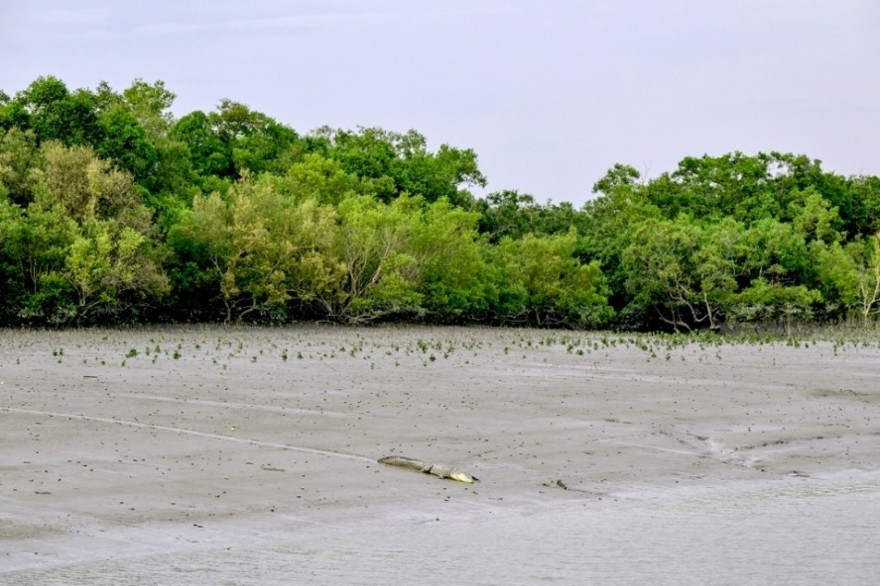
The Sundarbans, the world’s largest mangrove forest and a critical habitat for the Bengal Tiger (Panthera tigris tigris), are highly vulnerable to these changes. Rising sea levels threaten to submerge low-lying islands and alter salinity regimes, affecting vegetation structure and habitat quality. Increased cyclone frequency and intensity can lead to extensive habitat destruction and displacement of wildlife populations.
Marine ecosystems are also experiencing stress from warming ocean temperatures and ocean acidification. Coral reef systems in the Andaman and Nicobar Islands and Lakshadweep are particularly susceptible to coral bleaching events, which can significantly reduce marine biodiversity.
Mangrove Forest, Sundarban, West Bengal, India Photo Courtesy: Dr Sanjay Kumar Shukla
Conservation Strategies for Changing Climate
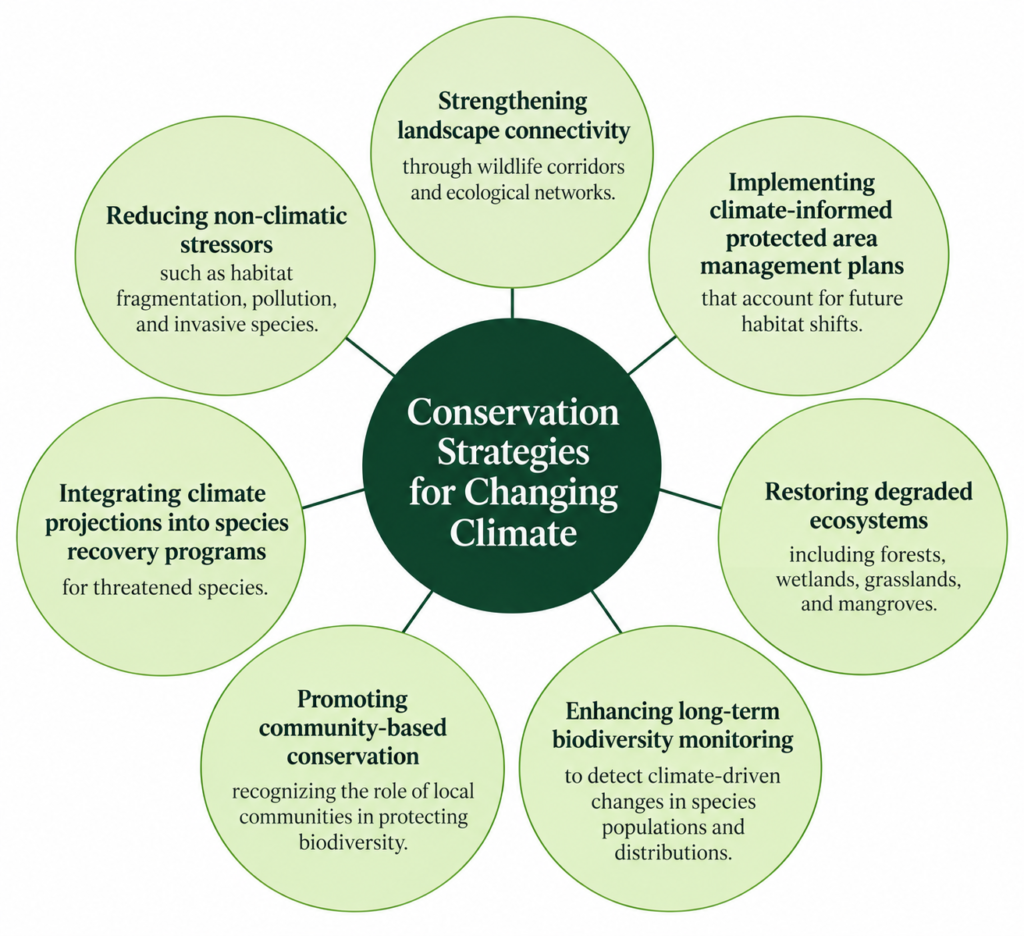
Conservation planning in the era of climate change must extend beyond traditional protected-area approaches. Climate-smart conservation requires integrating ecological, climatic, and socioeconomic considerations into management decisions.
Fig 2: Key Climate Adaptation Strategies for Wildlife Conservation
Conclusion
Climate change represents a transformative challenge for wildlife conservation in India. Rising temperatures, changing precipitation patterns, sea-level rise, forest fires, and extreme weather events are reshaping ecosystems across the country. The impacts are particularly severe in biodiversity hotspots such as the Himalayas, Western Ghats, and Sundarbans. Species range shifts, habitat degradation, and increasing ecological uncertainty threaten many of India’s iconic wildlife species.
Addressing these challenges requires a paradigm shift from static conservation approaches to dynamic, climate-resilient strategies. Integrating climate science into conservation planning, improving landscape connectivity, restoring ecosystems, and strengthening community participation will be essential for safeguarding India’s extraordinary biodiversity in the decades ahead. As climate change accelerates, proactive and adaptive conservation measures will determine whether India’s wildlife can persist and thrive in an increasingly uncertain future.
References
Forest Survey of India (2023). India State of Forest Report 2023. Ministry of Environment, Forest and Climate Change, Government of India.
Gopalakrishnan, R., Jayaraman, M., Bala, G., & Ravindranath, N.H. (2011). Climate Change and Indian Forests. Indian Institute of Science, Bengaluru.
Intergovernmental Science-Policy Platform on Biodiversity and Ecosystem Services (IPBES). (2021). Scientific Outcome of the IPBES-IPCC Co-Sponsored Workshop on Biodiversity and Climate Change.
Department of Science and Technology (DST), Government of India. (2020). Impact of Climate on Biodiversity in India and Probable Solutions.
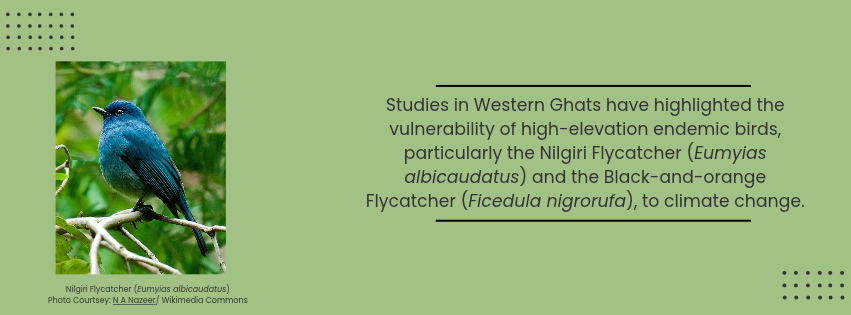
Sreekumar, E. R., & Nameer, P. O. (2021). Impact of climate change on two high-altitude restricted and endemic flycatchers of the Western Ghats, India. Current Science, 121(10), 1335–1342.
Krishnan, R., et al. (2020). Assessment of Climate Change over the Indian Region: A Report of the Ministry of Earth Sciences (MoES), Government of India. Springer Nature DOI: 10.1007/978-981-15-4327-2.
Sanjay, J., et al. (2020). Temperature Changes in India. In Assessment of Climate Change over the Indian Region, Chapter 2, pp. 21–45. Springer Nature DOI: 10.1007/978-981-15-4327-2_2. a
Dhara, C., Deshpande, A., Roxy, M. K., Dalpadado, P., & Shrestha, M. S. (2025).
A post-AR6 update on observed and projected climate change in India. PLOS Climate. Published 20 November 2025 DOI: 10.1371/journal.pclm.0000724
International Union for Conservation of Nature (IUCN). India Biodiversity Profile.
IUCN World Heritage Outlook. (2020). Western Ghats Conservation Outlook Assessment.
Dr Sanjay Kumar Shukla is a retired Indian Forest Service (IFS) officer with extensive experience in forest administration, wildlife conservation and environmental governance. He has served as Member Secretary in the Ministry of Environment, Forests and Climate Change, Government of India, and held senior leadership positions in forest management. A passionate wildlife photographer, he is deeply engaged in biodiversity conservation, ecosystem management and community development.