The impact of human–wildlife conflict differs across communities, shaped by their livelihoods, experiences and
relationships with wildlife.
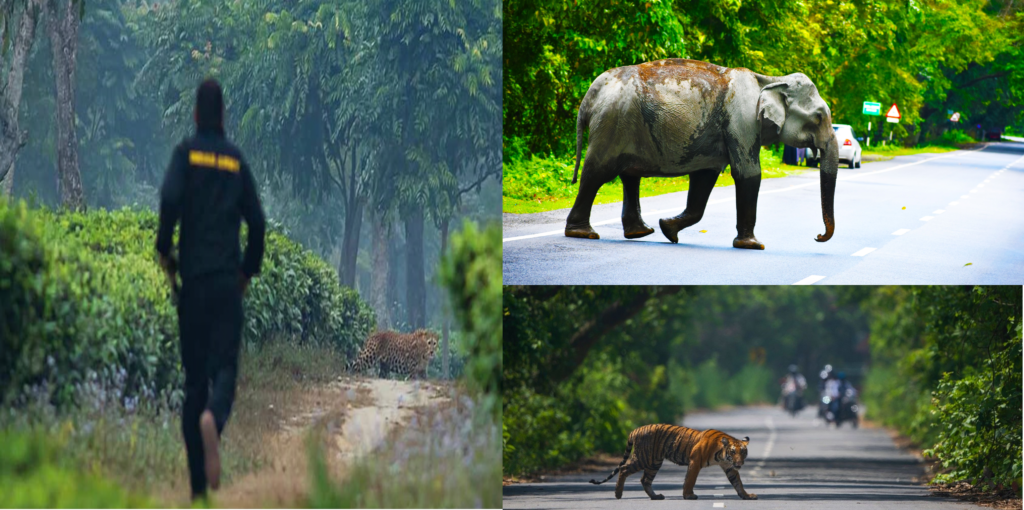
Clockwise: Elephant crossing a road surrounded by lush greenery, with cars parked under trees. Photo Courtesy: Pankaj Sharma/Pexel A majestic tiger crosses a road in Mustafabad, India, surrounded by dense greenery. Photo Courtesy: Sanjeev Kumar Maurya/Pexel
Imagine a large carnivore or a megaherbivore entering a farmer’s field at night. For the farmer, it may mean damaged crops, lost income and another sleepless night guarding what remains. A forest-dependent woman may experience the same landscape as a place where collecting fuelwood or fodder has become more difficult. A visitor may see the animal as part of India’s natural heritage. The animal is the same; the consequences of living alongside it are not.
This is the human dimension of human–wildlife conflict (HWC). Crop damage, livestock loss and human injury are visible impacts, but they do not explain how people experience risk, change routines or decide whether they can live alongside wildlife. Responses are shaped by livelihoods, household responsibilities, past encounters, cultural relationships and confidence in the institutions managing conflict. (Karanth & Kudalkar, 2017).
Understanding these experiences is central to examining human–wildlife relationships in India. Sankala Foundation is currently undertaking a situational analysis of human–wildlife conflict and coexistence through a review of published academic research, national and state-level reports, policy guidelines, and parliamentary questions raised in the Lok Sabha and Rajya Sabha between 2000 and 2026. The review examines how wildlife interactions extend beyond physical encounters, influencing livelihoods, everyday decisions, cultural relationships and people’s engagement with conservation institutions. It recognises that perceptions of wildlife are shaped not simply by the presence of animals, but by the experiences and circumstances of the people sharing these landscapes
Unequal Burden of Human–Wildlife Conflict
A review of existing literature highlights that the burden of human–wildlife conflict is not shared equally within communities. Around Rajaji National Park in Uttarakhand, Ogra (2008) found that women experienced high indirect costs of elephant conflict. Alongside farming and household work, women collected fuelwood, fodder and water. Crop-raiding therefore meant more than losing a harvest: it could add time spent guarding fields, repairing damage and replacing resources, or force women to abandon what they had collected after an encounter.
The consequences can be especially severe when an encounter results in death. Research on women widowed by tiger attacks in the Sundarbans documented economic insecurity as well as social and psychological consequences. Chowdhury et al. (2016) describe stigma, discrimination and restrictions on mobility. The effects of HWC can continue long after an incident, reshaping a family’s livelihood and place within the community.
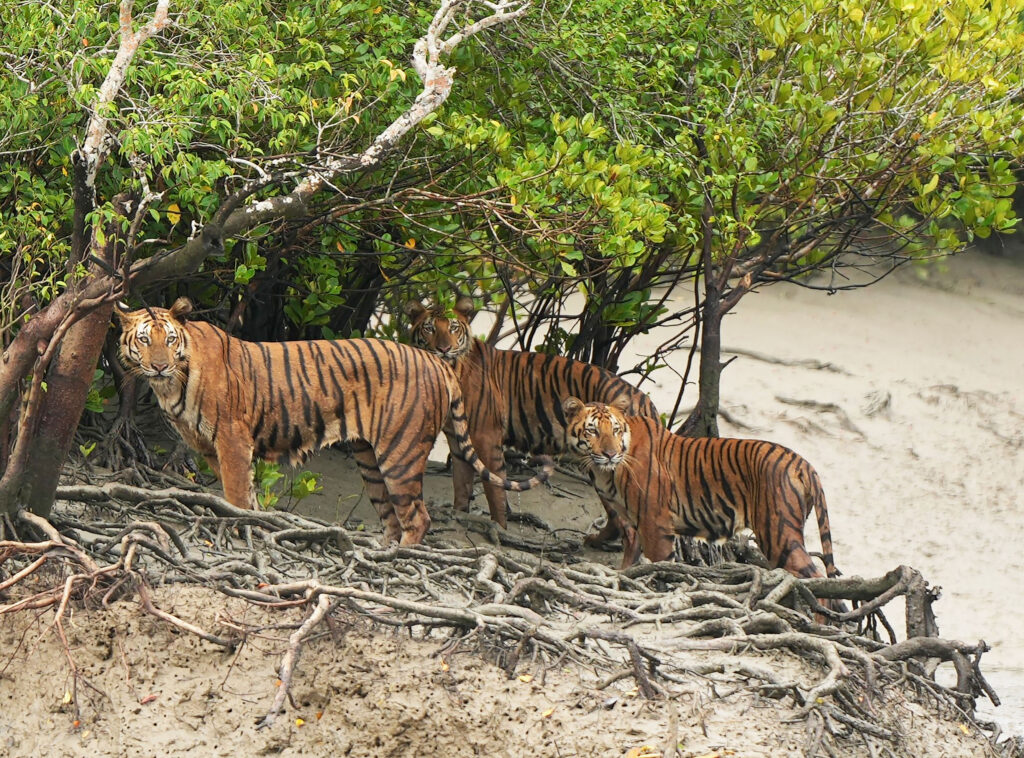
Group of Tigers in Sundarbans Photo Courtesy: Nirmalaya Chakraborty
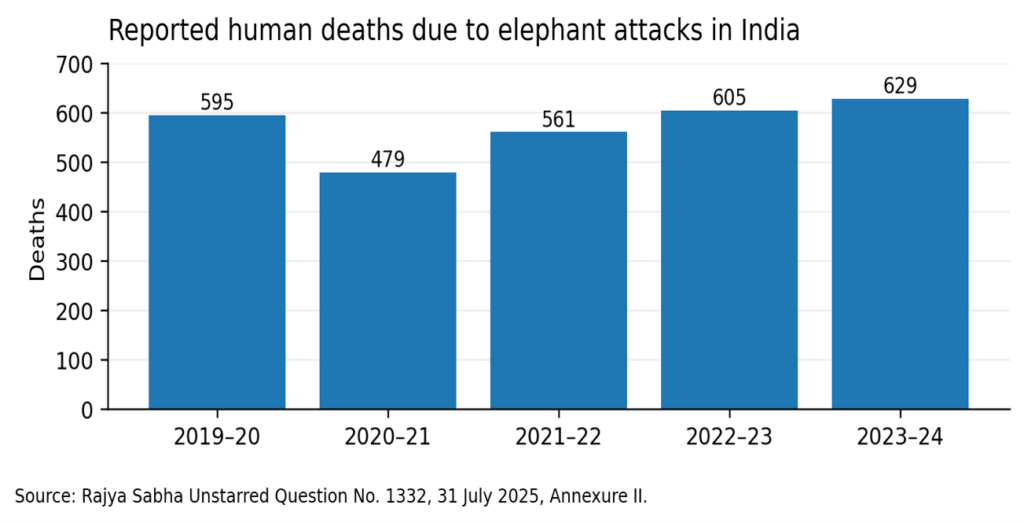
National figures show the scale of some risks. A Rajya Sabha reply reported 629 human deaths due to elephant attacks in 2023–24, compared with 595 in 2019–20. These figures record fatalities, not the wider social and economic burden of conflict.
Figure 1. Reported human deaths due to elephant attacks in India, 2019–20 to 2023–24
The Role of Perception and Culture in Human–Wildlife Relationships
People respond not only to what wildlife has done, but also to what they fear might happen. Perceived risk can influence where people walk, when they work in fields and how often they enter nearby forests, even when no attack has occurred. In Western Ghats, frogs found near damaged cardamom pods were sometimes blamed for crop damage, although research questioned this belief (Kanagavel et al., 2017). Misidentifying the cause of a loss can direct responses towards the wrong species.
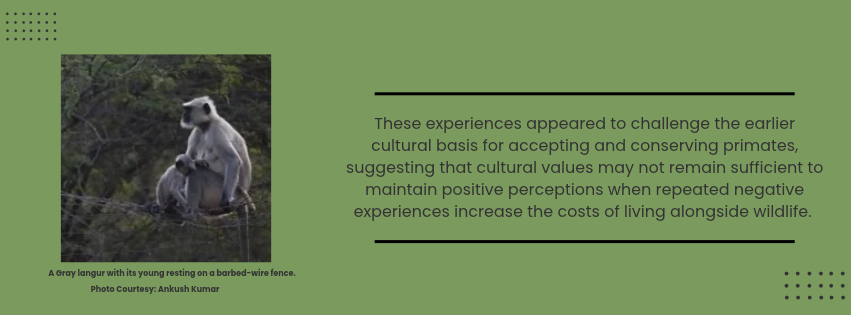
My master’s field research in Nimli Khurd, Rajasthan, highlighted how cultural relationships with wildlife can differ between species. Semnopithecus entellus or gray langur (Hanuman langurs) were associated with established religious and cultural beliefs. However, farmers expressed distress and frustration over the presence of relocated Rhesus macaques. This suggests that cultural acceptance of one species does not necessarily extend to another, particularly when everyday interactions involve conflict.
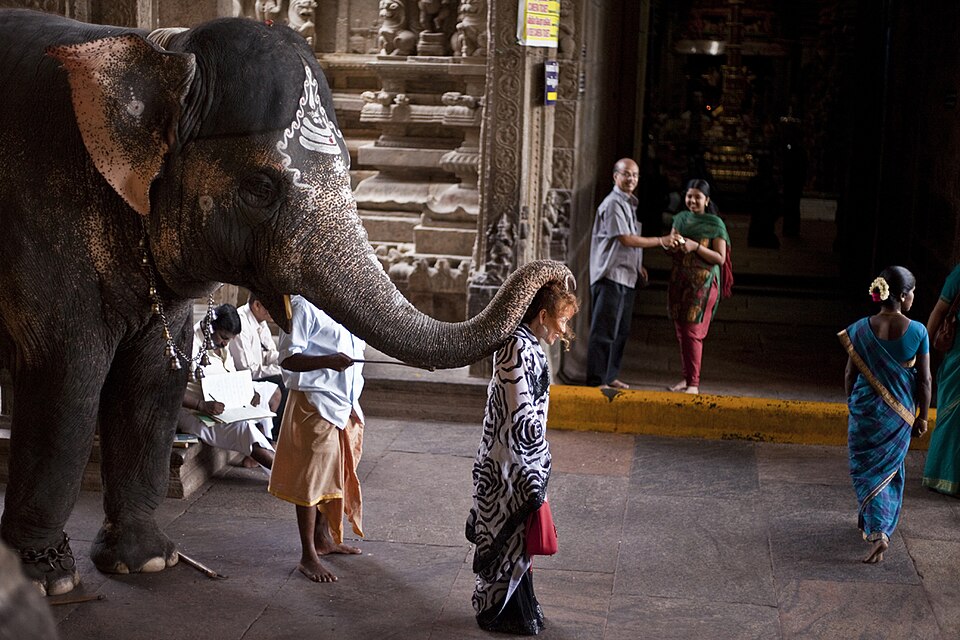
A contrasting example comes from North Bengal, where positive attitudes towards elephants have persisted despite human–elephant conflict. Elephants hold religious and cultural significance, being revered as Mahakal, an incarnation of Lord Shiva, and referred to by some tribal communities as Hati Thakur, or Elephant God. Tourism also provides economic and social benefits, contributing to their continued acceptance. Together, these examples demonstrate that people’s relationships with wildlife are shaped not only by cultural beliefs but also by their direct experiences, livelihood interests and the perceived costs and benefits of coexistence.
A traditional ritual at Meenakshi Amman Temple, Madurai, where devotees seek blessings from the temple elephant.
Photo Courtesy: Vinoth Chandar/Wikimedia Commons
Trust in Institutions: An Essential Part of Coexistence
In India, people’s willingness to live alongside wildlife is closely linked to how human–wildlife conflict is addressed by government institutions, particularly State Forest Departments. Delayed compensation, complicated claim procedures, inadequate relief and difficulties in reporting incidents can deepen frustration. Communities may support wildlife conservation while questioning whether their losses receive adequate recognition and timely assistance. Transparent compensation mechanisms, accessible grievance redressal and stronger engagement with local communities are therefore essential to building trust in conservation institutions.
From conflict management to relationship management
Human–wildlife relationships in India vary across regions, landscapes and communities. A farmer living near a forest may prioritise crop protection, a pastoral household may depend on livestock security, while forest-dependent communities may require safe access to fuelwood, fodder and other forest resources. Cultural and religious beliefs also influence how different wildlife species are perceived and accepted.
Effective HWC management must therefore go beyond recording incidents or classifying communities as positive or negative towards wildlife. It requires locally appropriate approaches that address livelihood losses, recognise cultural relationships, strengthen community participation and ensure timely institutional support. Project RE-HAB, launched in Karnataka in 2021, uses bee boxes as fences to discourage elephants from entering human settlements. The initiative aims to reduce human–elephant encounters while protecting both local communities and elephants. Understanding these human dimensions can help India move from responding to individual conflict incidents towards more equitable and sustainable approaches to human–wildlife coexistence.
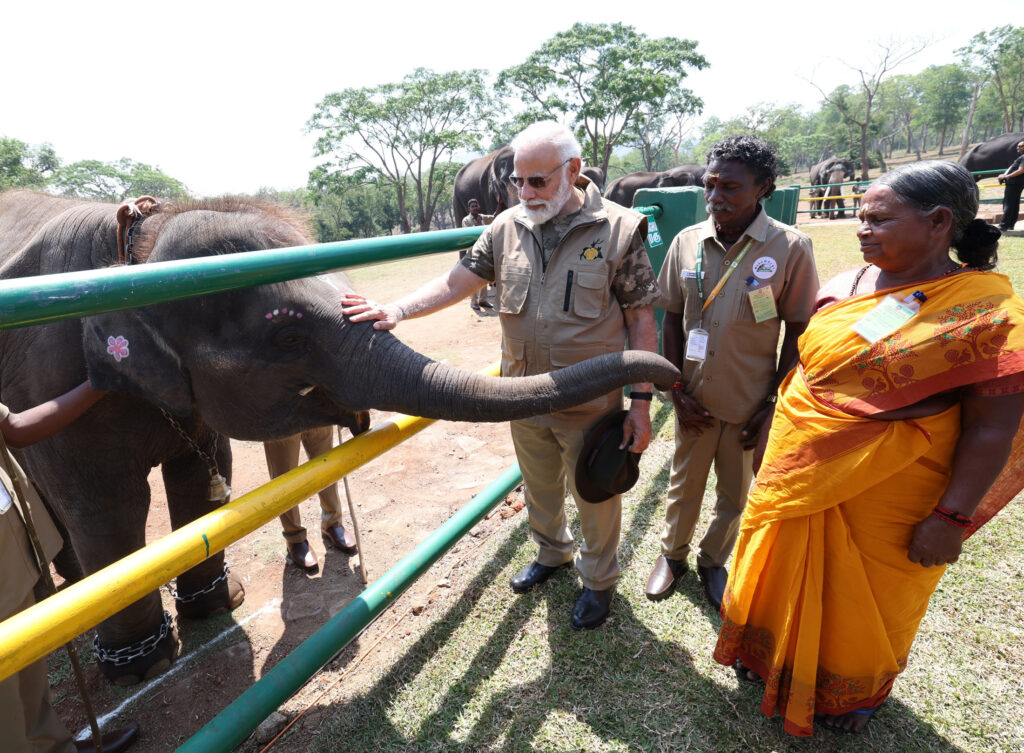
PM Modi at the Theppakadu Elephant Camp in Mudumalai Tiger Reserve with elephant whisperers Bomman and Bellie.
Chowdhury, A. N., Mondal, R., Brahma, A., & Biswas, M. K. (2016). Ecopsychosocial aspects of human–tiger conflict: An ethnographic study of tiger widows of Sundarban Delta, India. Environmental Health Insights, 10. https://doi.org/10.4137/EHI.S24899
Kanagavel, A., Parvathy, S., Nirmal, N., et al. (2017). Do frogs really eat cardamom? Understanding the myth of crop damage by amphibians in the Western Ghats, India. Ambio, 46, 695–705. https://doi.org/10.1007/s13280-017-0908-8
Karanth, K. K., & Kudalkar, S. (2017). History, location, and species matter: Insights for human–wildlife conflict mitigation from India. Human Dimensions of Wildlife, 22(4), 331–346. https://doi.org/10.1080/10871209.2017.1334106
Ministry of Environment, Forest and Climate Change. (2024, December 9). Parliament question: Crop damage due to wild animal attacks. Press Information Bureau, Government of India. https://www.pib.gov.in/Pressreleaseshare.aspx?PRID=2082523
Ministry of Environment, Forest and Climate Change. (2025, July 31). Human-animal conflict (Rajya Sabha Unstarred Question No. 1332), Annexure II. Government of India. https://sansad.in/getFile/annex/268/AU1332_m4ulqc.pdf?source=pqars
Ogra, M. (2008). Human–wildlife conflict and gender in protected area borderlands: A case study of costs, perceptions, and vulnerabilities from Uttarakhand (Uttaranchal), India. Geoforum, 39, 1408–1422. https://doi.org/10.1016/j.geoforum.2007.12.004
Ankush is a Junior Fellow at Sankala Foundation, specialising in biodiversity conservation, ecological restoration and human–wildlife conflict. He holds a master’s degree in Environment and Development and has field experience in conservation research, biodiversity monitoring and GIS-based spatial analysis.