

Plastics in the Wild: A Heartfelt Cry from India’s Tiger Reserves

Plastic pollution is no longer just an urban problem. It is emerging as a growing threat to India's tiger reserves and the fragile ecosystems they protect.

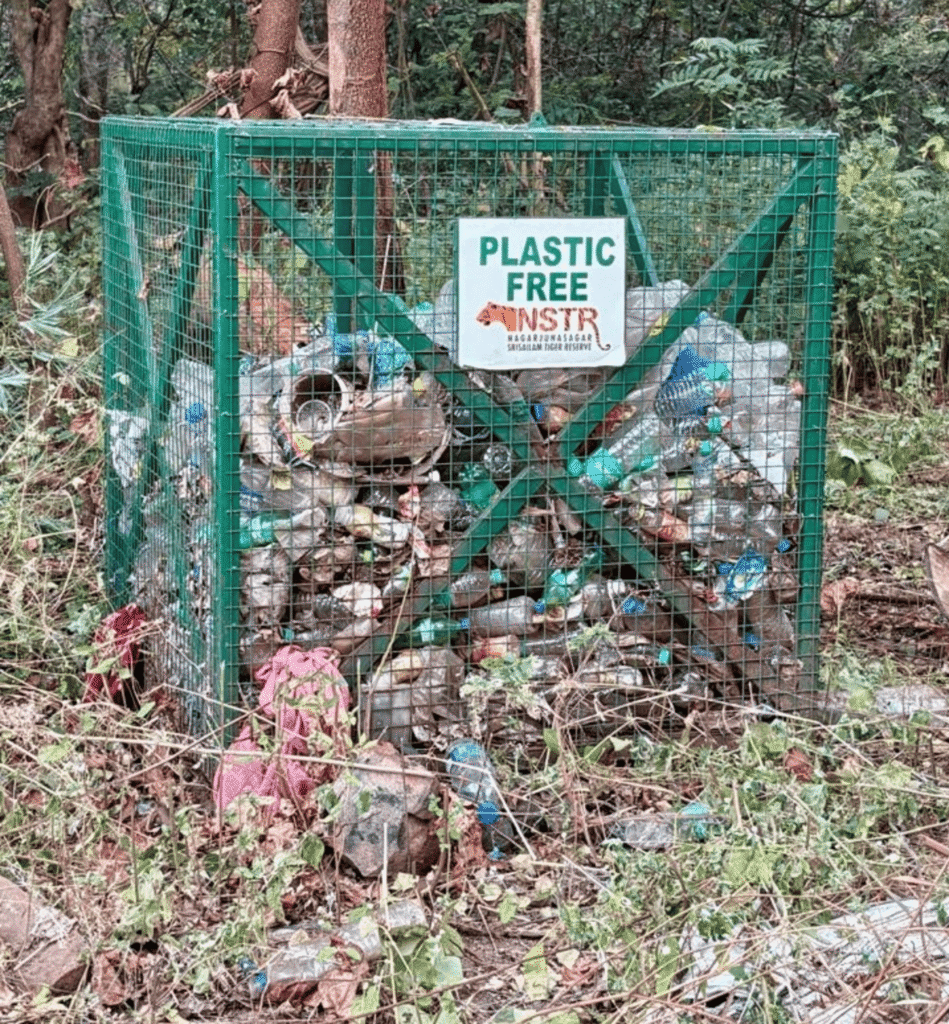
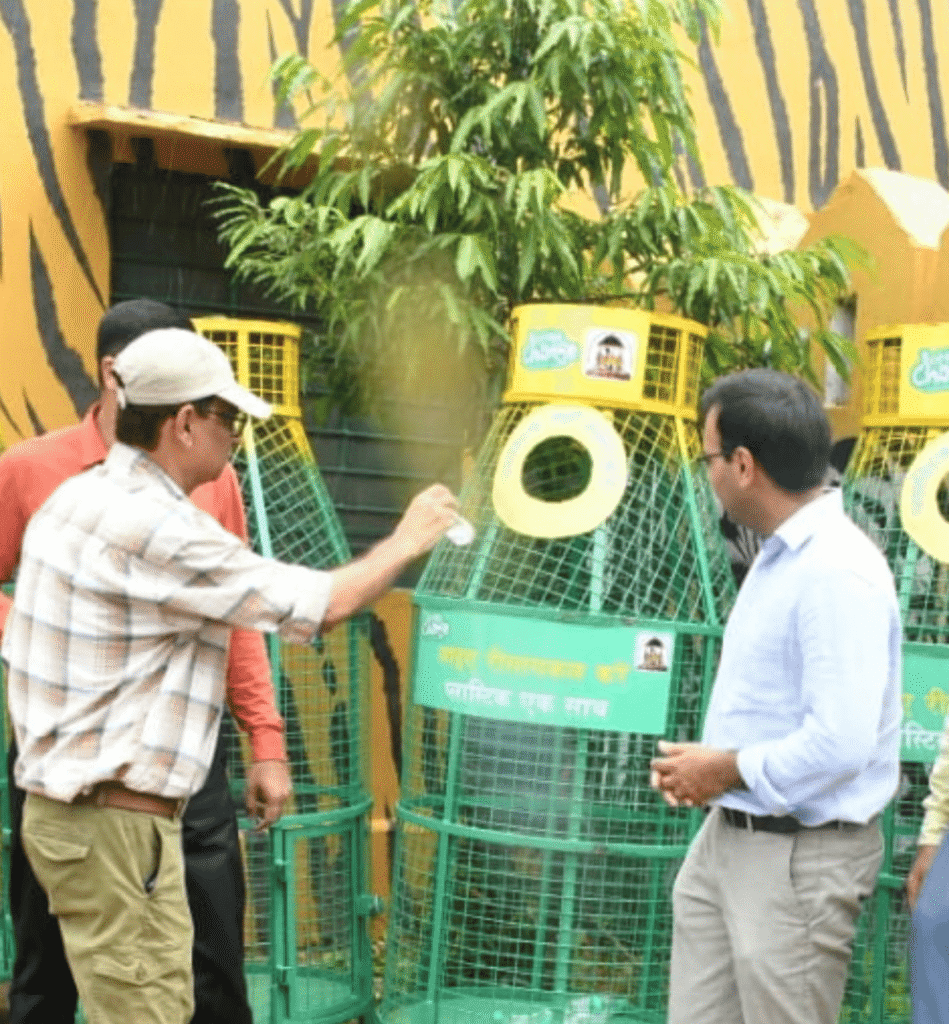
Plastic bin inside the protected area
Photo Courtesy: VB Kumar

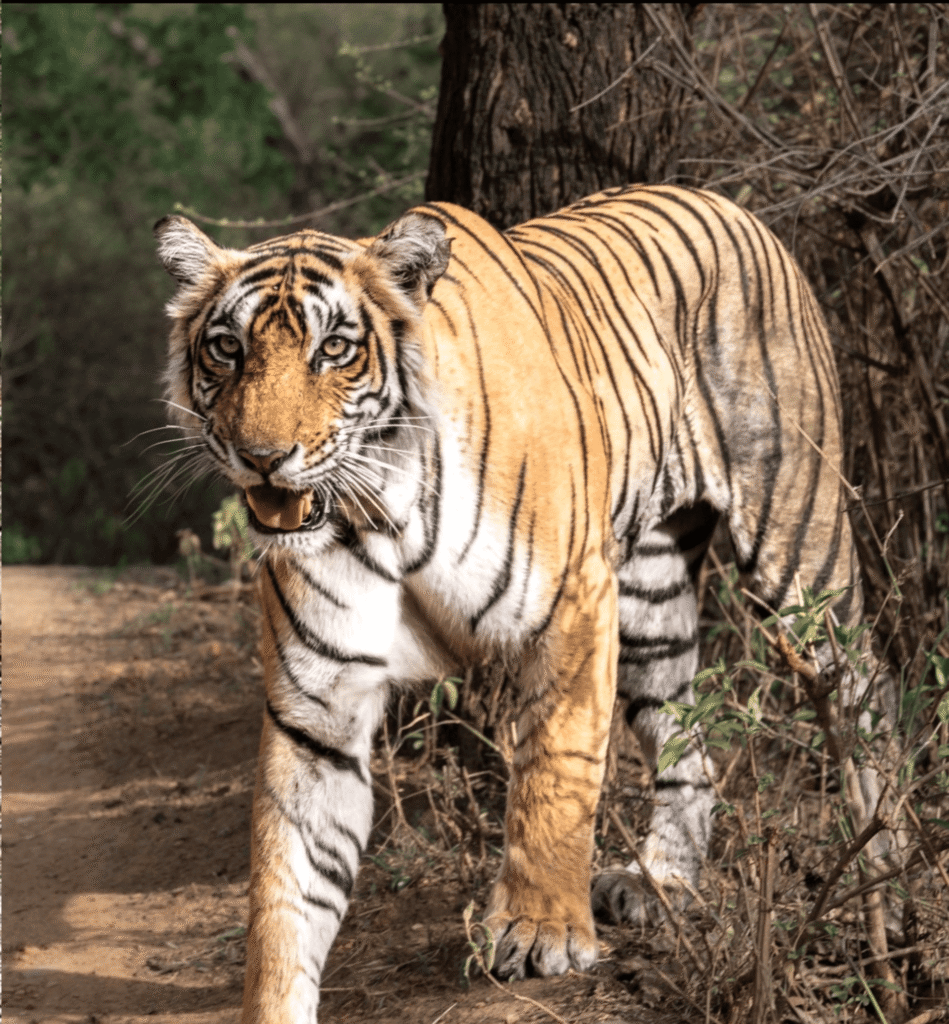
Tiger in Tadoba-Andhari Tiger Reserve, Maharashtra

Photo Courtesy: VB Kumar

The Wilderness Under Threat

On my recent field visits to Tadoba-Andhari, Ranthambhore, Kaziranga, Panna, and Srisailam Tiger Reserves, I was struck by a disturbing reality. Beneath the golden grasslands, ancient sal forests, and along the banks of the Krishna and Ken rivers, plastic waste had become an increasingly visible presence in landscapes meant to remain pristine.

Plastic bottles lay near waterholes. Discarded food wrappers were caught in the undergrowth. Single-use bags had accumulated along small streams and forest tracks. These are the very places where tigers drink, where prey gathers, and where countless other species depend on healthy ecosystems to survive. The growing presence of plastic is a stark reminder that even India’s most protected landscapes are not immune to the impacts of human activity.

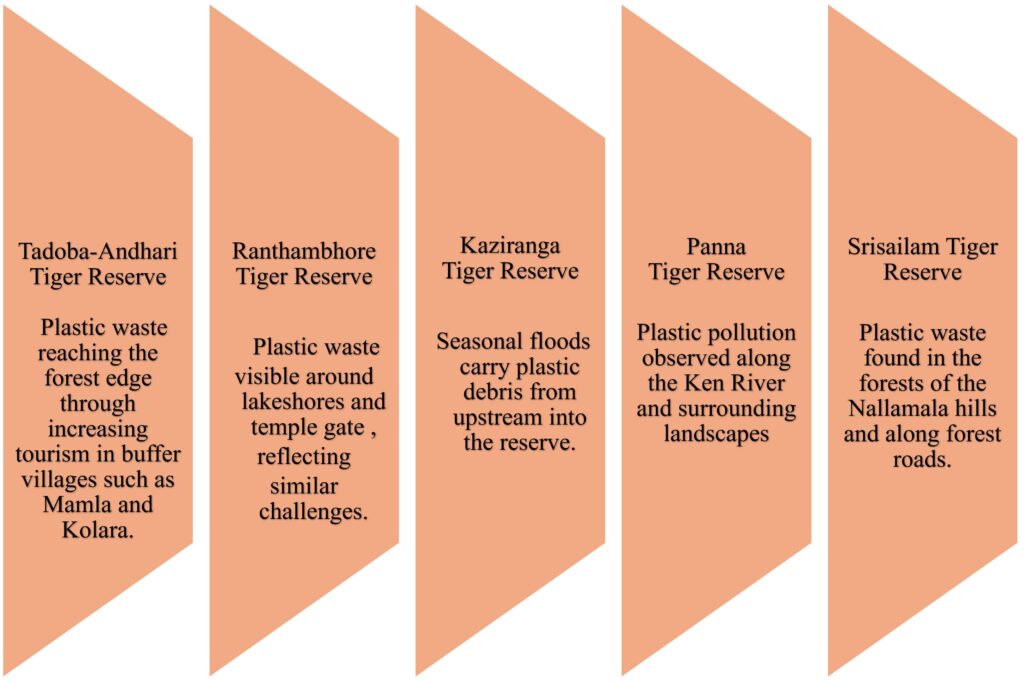
In Tadoba’s buffer villages of Mamla and Kolara, increasing tourism brings plastic waste to the forest’s edge. Ranthambhore’s lakeshores face similar challenges. In Kaziranga, seasonal floods carry plastic debris from upstream into the reserve, while Panna’s Ken River and the forests of Srisailam reflect the same growing concern.

Field Observations Across Tiger Reserves, India

This is more than a problem of litter. Plastic pollution threatens wildlife, fragile ecosystems, and the well-being of forest-dependent communities. Animals may ingest or become entangled in plastic waste, affecting their health and survival. Plastic can contaminate water sources and disrupt habitats that support entire food webs. During my interactions with forest staff and local communities, I sensed a deep concern about protecting these landscapes from a problem that continues to grow despite their best efforts.

Did you Know ?

India generates 15 million of tonnes of plastic waste every year. Around 22% of plastic waste generated globally is mismanaged, allowing it to leak into terrestrial and aquatic ecosystems. 

From local Action to National Change

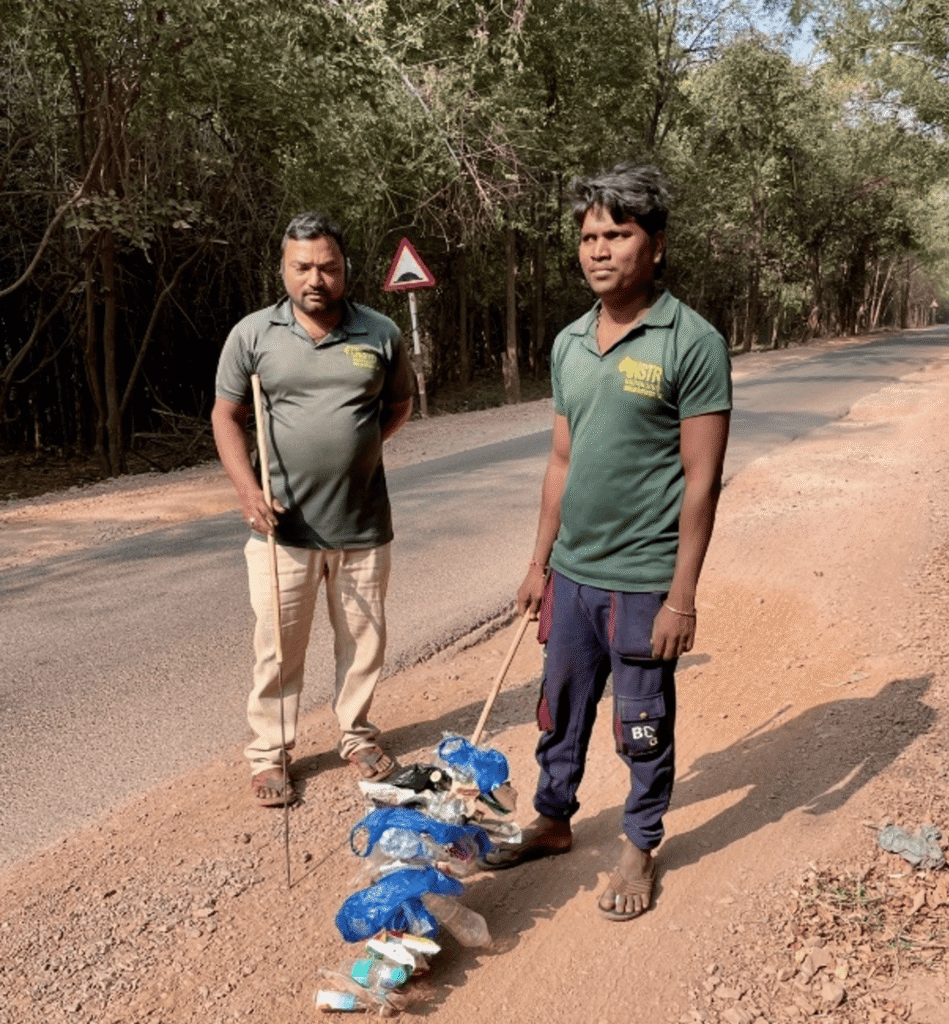
At Srisailam, I met the inspiring “plastic hunters”, local volunteers and forest staff who patrol trails and riverbanks daily, often with limited resources. Their quiet dedication moved me deeply. These are ordinary people performing extraordinary acts of love for the land.

Several Chenchu tribal members helping keep Srisailam Tiger Reserve clean by collecting plastic waste along forest roads.
Photo Courtesy: VB Kumar

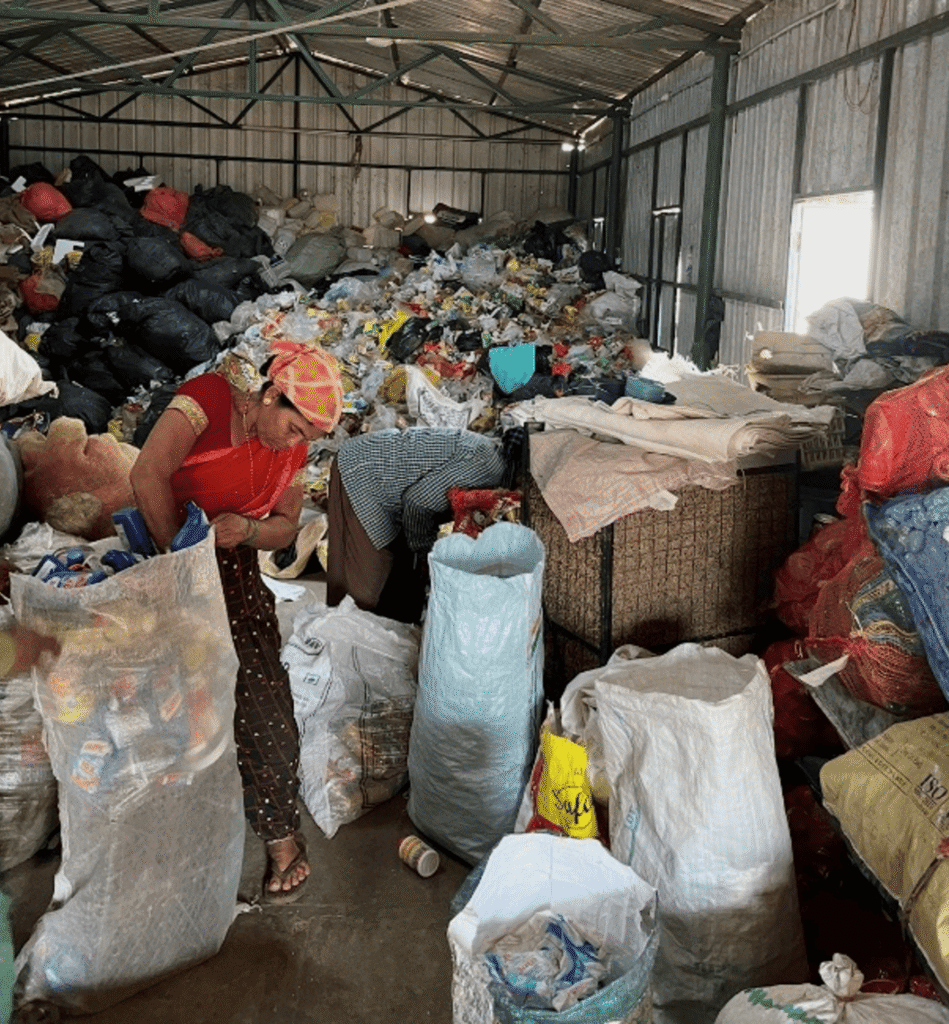
Collection centre at Tadoba tiger reserve

Photo Courtesy: VB Kumar

Looking Beyond Infrastructure

In Tadoba, the pioneering Zero Landfill Project has shown us the way. Through strict source segregation, community composting, recycling drives, and strong partnership with gram sabhas and women’s self-help groups, waste is now turned into a resource. Organic matter nourishes restoration sites. Plastic is upcycled. Tourists are sensitised. Waste workers labour with dignity. The initiative demonstrates how community participation can transform waste into a resource while strengthening conservation.

Srisailam’s plastic hunters and Panna’s enthusiastic youth clean-up teams echo this same spirit. When communities are truly empowered, real change happens, not just for a season, but for generations.

While these initiatives demonstrate what is possible at the local level, scaling them across India will require strong policy support. The Solid Waste Management (SWM) Rules 2026 present exactly that opportunity. The new Solid Waste Management (SWM) Rules 2026 offer us a historic moment. With stronger Extended Producer Responsibility, mandatory segregation in eco-sensitive zones, bans on single-use plastics near protected areas, and support for local processing units, we can finally move from scattered pilots to real transformation.

Towards Zero-Plastic Tiger Reserves

Imagine every tiger reserve in India becoming a zero-plastic-landfill zone. With community-managed Material Recovery Facilities, simple monitoring technologies, and waste management integrated into every reserve’s management plan, this vision is well within reach. Backed by CSR partnerships and by empowering local tribes and villages as equal partners in conservation, India can create a model that is both environmentally sustainable and socially inclusive.

The time has come to build on the successes of Tadoba, Srisailam, Panna, and other pioneering initiatives. By scaling these community-led efforts across the country, India can redefine how protected areas are managed and set a global benchmark for conservation.

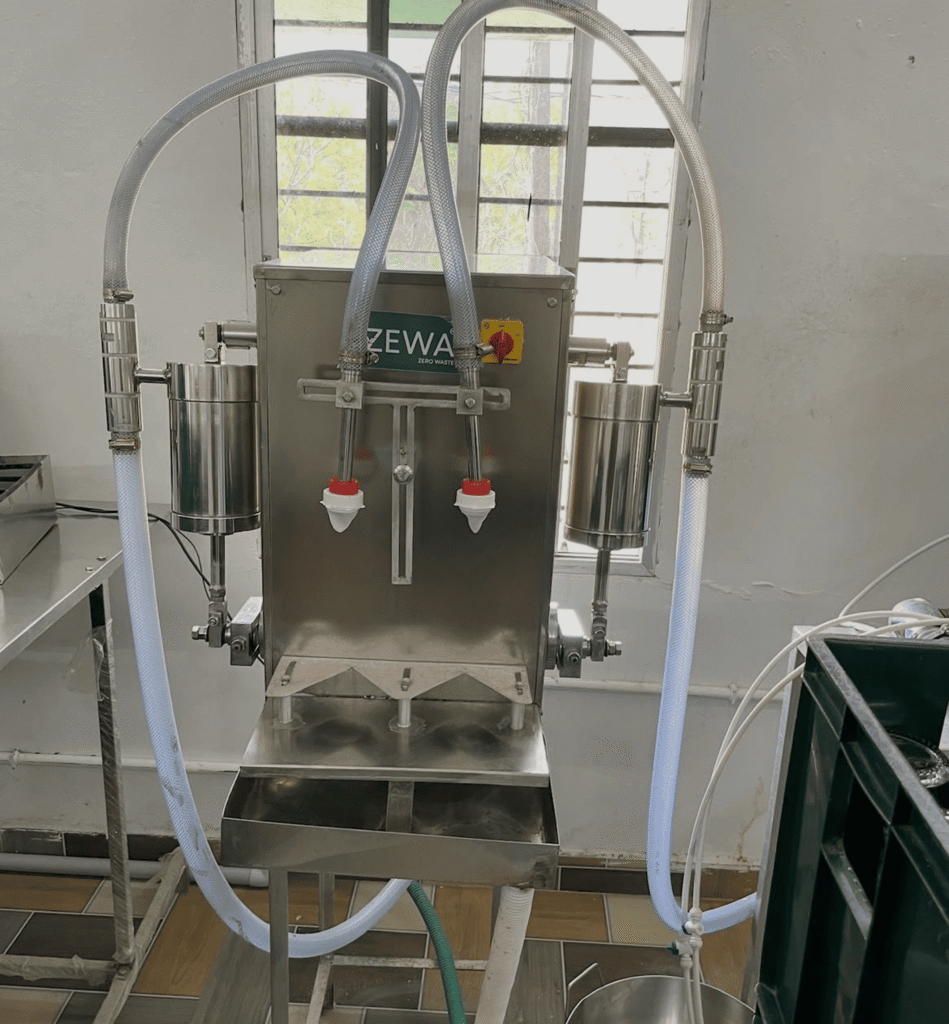
Water filtration plant in Tadoba-Andhari Tiger Reserve an initiative promoting safe drinking water and reducing plastic bottle waste.
Photo Courtesy: VB Kumar

Material Recovery Facility (MRF) established in Ranthambhore Tiger Reserve to support plastic waste collection and recycling through CSR and private sector collaboration.

Photo Courtesy: VB Kumar

A call to action

India has emerged as a global leader in wildlife conservation, particularly in protecting its big cats. The next step is equally important: ensuring that these protected landscapes remain free from plastic pollution. By effectively implementing the Solid Waste Management (SWM) Rules 2026 and scaling successful community-led initiatives, India has the opportunity to declare its tiger reserves as zero-plastic-landfill zones, setting a new global benchmark for conservation.

The success of Tadoba, the commitment of Srisailam’s plastic hunters, and the efforts of countless communities across the country show that this vision is achievable. Now is the time to build on these local successes and turn them into a national movement.

The wilderness is calling us. Let us answer with urgency, wisdom, and unwavering commitment, so that India’s tiger reserves remain true sanctuaries for wildlife and for generations to come.

Author

  • Mr VB Kumar is a retired Indian Forest Service officer of 1987 batch, with over 34 years of demonstrated experience across diverse sectors, including forestry, wildlife conservation, eco-tourism, water resources, and large public-sector governance.

    View all posts
Cart (0 items)