




Living With the Heat: Impact and Building Future Resilience
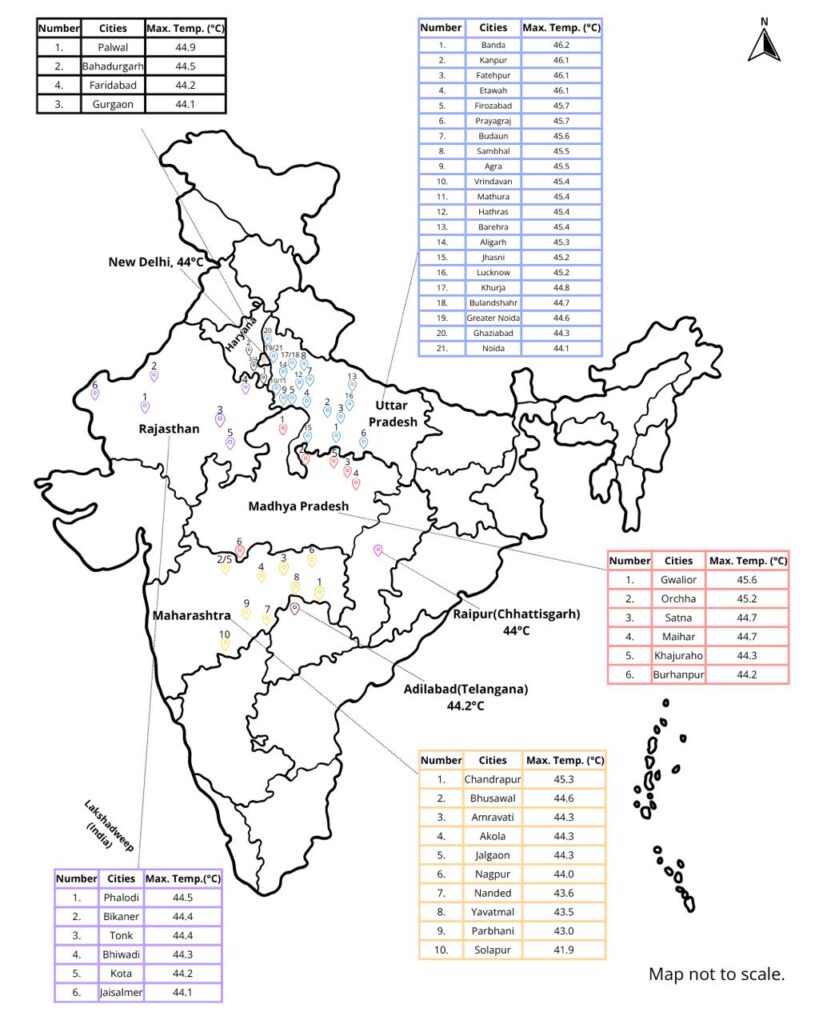
New Delhi, Gurgaon, Kanpur, Prayagraj, Nagpur, Yavatmal, Kota, Bikaner, Gwalior, and Raipur – 10 cities from six different states – Haryana, Uttar Pradesh, Rajasthan, Madhya Pradesh, Maharashtra and Chhattisgarh – found themselves besides 40 other Indian cities on a ‘Hot List’ compiled by AQI, the air quality monitoring platform, on April 27, 2026. It was a list of the top 50 hottest cities in the world, all of which were from India (Figure 1). There were no cities from the Middle East or sub-Saharan Africa or Australia on the list – regions we traditionally associate with high temperatures. Average maximum temperature across these 50 cities was around 44.7 °C with the lowest maximum temperature reported as 41.9°C in Solapur, Maharashtra. At the time of writing this, major parts of northwest, central and peninsular India including Delhi NCR are facing normal to severe heat waves with maximum temperatures staying between 43 – 45 °C and breaching 47 °C in Vidarbha region, Maharashtra. Such spells of extreme heat are not new in India, and it is how the months of May and June have always been identified with when schools close for annual summer holidays. What is relatively new is how these extreme heat events are now arriving early in April and even late March, and the increasing frequency and duration of these events.
Fig 1: The world’s 50 hottest cities as of 27 April 2026, all located in India. ( Data Source: AQI); visualization prepared by Sankala Foundation.
Increase in Extreme Heat: A new normal
The Hidden Costs of Heat Stress: Public Health, Economy and Livelihoods
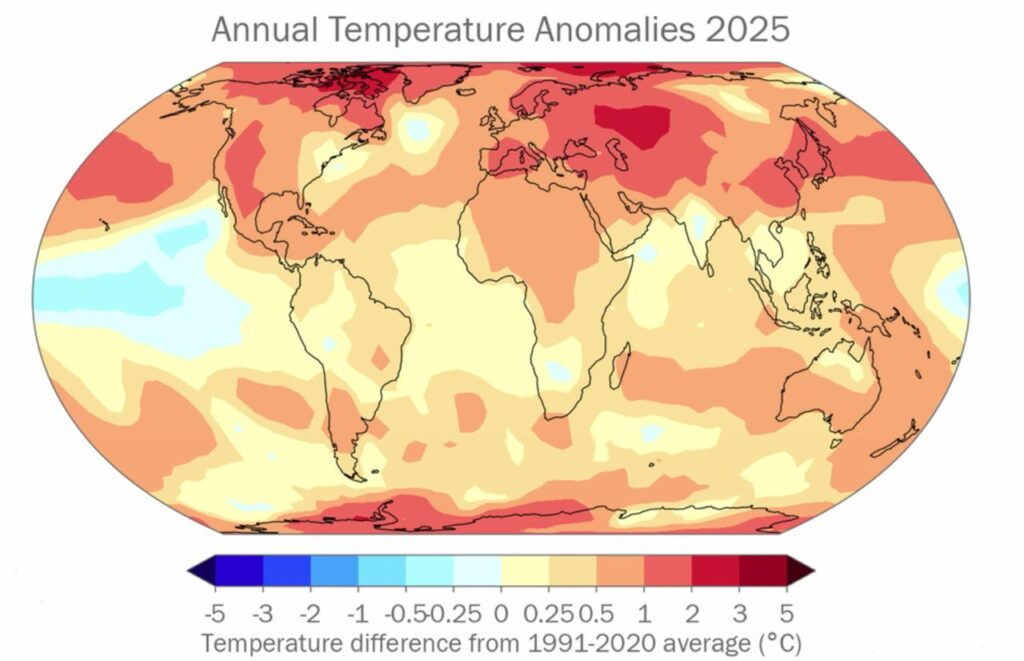
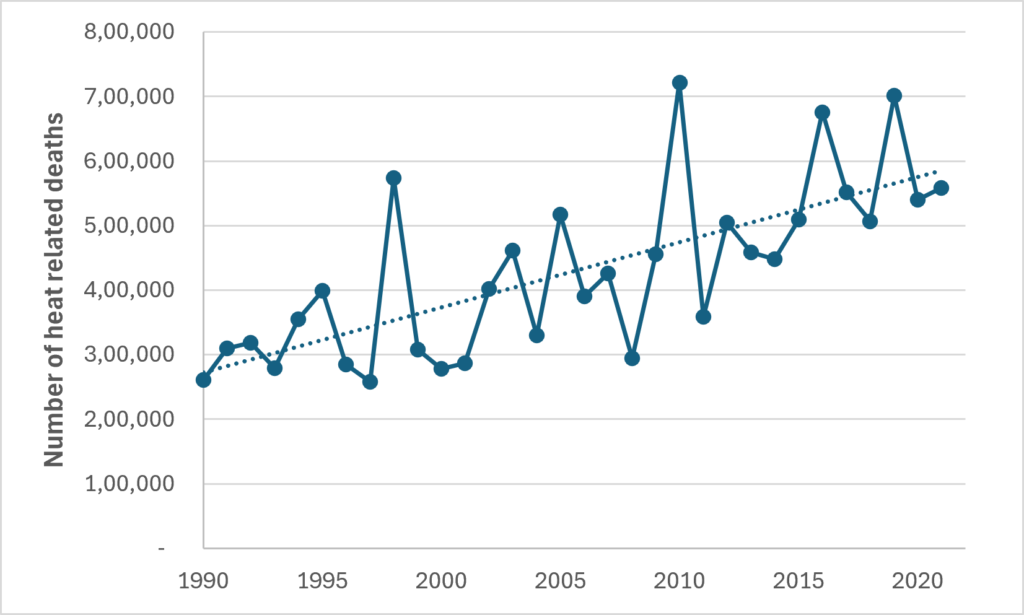
The increase in heat stress is not limited to India but is a global phenomenon. The World Meteorological Organization in its report State of the Global Climate 2025, stated that the 2015-2025 were the hottest 11 years till date. At around 1.43 °C above the 1850-1900 average temperature, 2025 was the second hottest year recorded. This implies more extreme weather events such as intense heat, wildfires, droughts, floods, and cyclones, continued warming of oceans and decreasing ice and glacier coverage in the Arctic and Antarctica. There has been an estimated 63% increase in heat related deaths worldwide since the 1990s with an average of over 5.4 lakh people dying every year.
Adapting to the rise in heat stress
References
-
https://edition.cnn.com/2026/05/11/climate/50-hottest-cities-aqi-india-heatwave
-
https://www.nature.com/articles/srep26153
-
https://www.bbc.com/news/articles/c5yp8r4ryvmo
-
https://www.downtoearth.org.in/energy/decoding-indias-record-256-gw-power-peak-demand-dispatch-and-dilemmas
-
https://timesofindia.indiatimes.com/city/pune/pune-district-administration-issues-heatwave-advisory-directs-firms-to-provide-fans-rest-areas-for-workers/articleshow/131076858.cms
-
Prabhu, Shravan, Keerthana Anthikat Sukesh, Srishti Mandal, Divyanshu Sharma, and Vishwas Chitale. 2025.
How Extreme Heat is Impacting India: Assessing District-level Heat Risk.
New Delhi: Council on Energy, Environment and Water.
-
Ministry of Earth Sciences.
Response to Lok Sabha Unstarred Question No. 1546: Deaths Caused Due to Heat Waves.
-
India Lancet Countdown on Health and Climate Change Data Sheet 2025.
-
World Meteorological Organisation.
State of The Global Climate 2025.
Author
-
View all postsSaurabh Datta supports the research and communication efforts in the Water sector at Sankala Foundation. He holds Master’s degrees in chemistry from IIT Roorkee and chemical engineering from the University of Twente, Netherlands. He has diverse experience in programme management, project implementation, research, engineering, and communication in the environment sector.