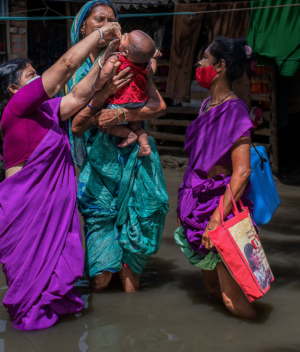
India is prone to natural disasters. Floods, cyclones, landslides, earthquakes, heatwaves and urban flooding affect millions of people every year and often wipe out lives in minutes. Recent increase in natural disaster frequency and intensity have highlighted the need to improve disaster preparedness at all levels. If we take last 5-6 years for natural disasters, India experienced lightning and thunderstorms in Bihar, Odisha, and Jharkhand, severe floods in Assam, Manipur, Himachal Pradesh, Kerala, and Punjab, heatwaves in northern, southern and central India, and cyclonic storms like Michaung, Remal, Fengal and Dana in coastal states.
The 2023 Glacial Lake Outburst Flood (GLOF) in Sikkim and the 2024 Kerala landslides and flash floods showed how disasters can kill many, damage infrastructure, disrupt livelihoods, and isolate populations from outside help. These disasters often have long-term effects on education, healthcare, mental health, and local economies. Such experiences emphasize the need for resilient communities that can respond to calamities. Institutions, response forces and technology remain important, but experience has repeatedly demonstrated that the first and most immediate response often comes from within the community itself.
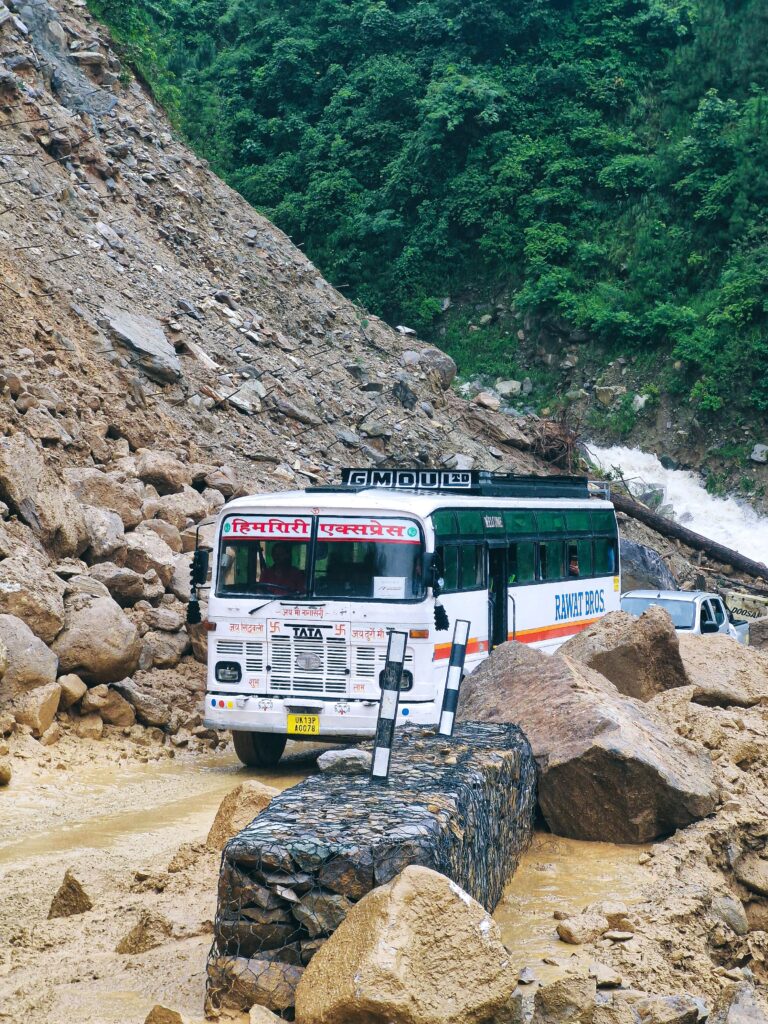
Bus navigating a landslide on a mountain road in Uttarakhand, India | (Photo Courtesy: Aman Gairola/Pexel)
India’s approach to disaster management has undergone a sea change in the last decade. The focus has moved from reactive relief measures to preparedness, resilience and local participation. The key to this change is an increasing realisation that communities are not passive victims in disasters, they are active responders, able to save lives when armed with the right knowledge, training and support.
Recent Major Natural Disasters in India
Sl No.
Year
Disasters
Affected State
1
2020
Lightning & Thunderstorm
Bihar, Uttar Pradesh & Jharkhand
2
2020
Cold Wave
Bihar & Uttar Pradesh
3
2021
Floods and Heavy Rains
Maharashtra & Uttarakhand
4
2021
Lightning & Thunderstorm
Odisha, Madhya Pradesh, Bihar, Maharashtra, West Bengal & Jharkhand
Source: Ministry of Statistics and Programme Implementation
Aapda Mitra: Strengthening Community Preparedness and Local Capacity
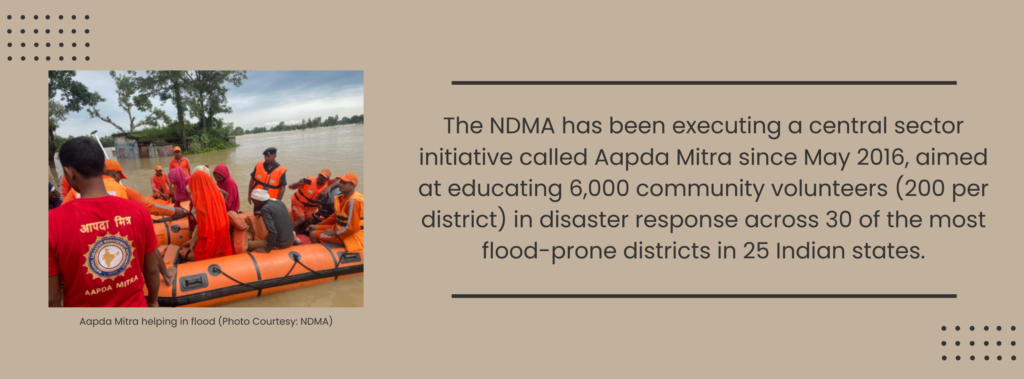
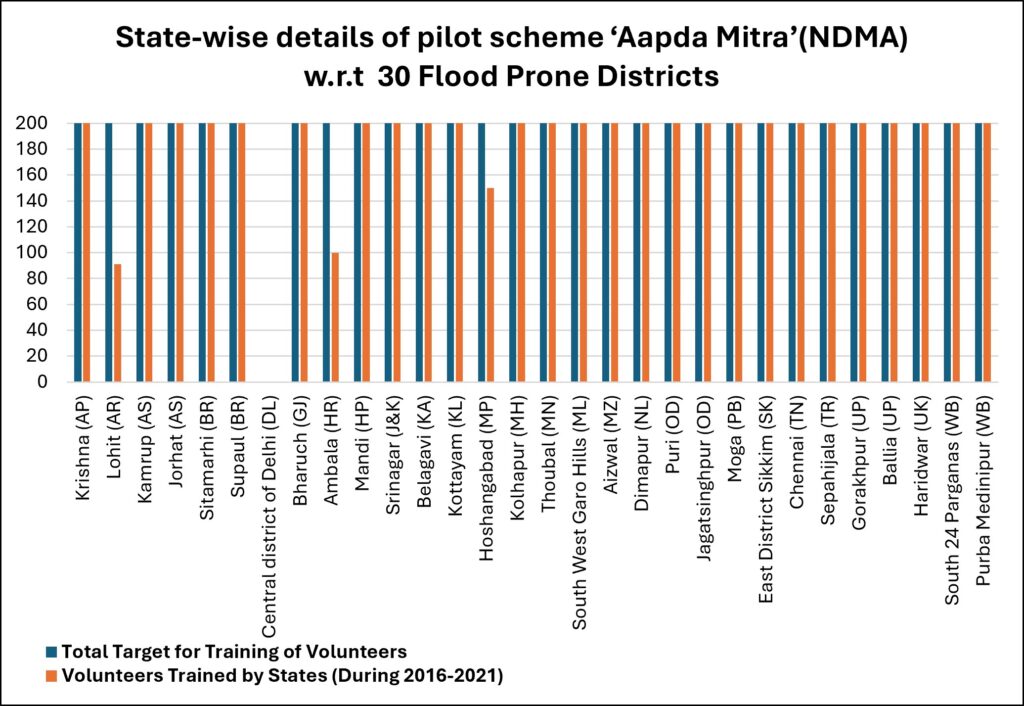
The NDMA has been executing a central sector initiative called Aapda Mitra since May 2016, aimed at educating 6,000 community volunteers (200 per district) in disaster response across 30 of the most flood-prone districts in 25 Indian states. The district-wise distribution of volunteers highlights NDMA’s emphasis on strengthening local response capacities through a decentralized and community-driven approach to disaster preparedness (Fig 1). Owing to their proximity to affected areas and foundational disaster-response training, these volunteers play a crucial role in bridging the gap between the onset of a disaster and the arrival of professional response teams.
Aapda Mitras are trained in search and rescue operations, first aid, evacuation procedures, flood response, crowd management, rope skills, emergency communication, and the interpretation of early warning signals. Equipped with essential responder kits, they enhance local disaster-response capacity and community resilience. Regular mock drills and simulation exercises further improve coordination, confidence, and preparedness during emergencies.
Fig. 1: State-wise details of pilot scheme ‘Aapda Mitra’for the year 2016-2021 (NDMA)
Beyond disaster response, the initiative promotes awareness, community participation, and a culture of readiness at the grassroots level, making disaster resilience a shared societal responsibility rather than relying solely on institutional mechanisms.
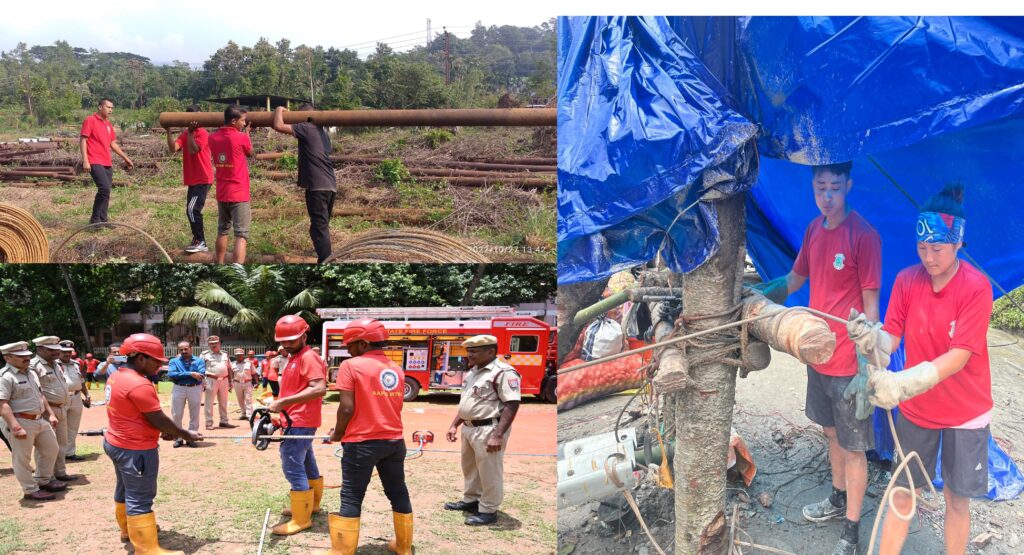
Clockwise from left: Training of Aapda Mitra Volunteers (Photo Courtesy: NDMA) Aapda Mitra Volunteers during Sikkim GLOF (Photo Courtesy: NDMA)
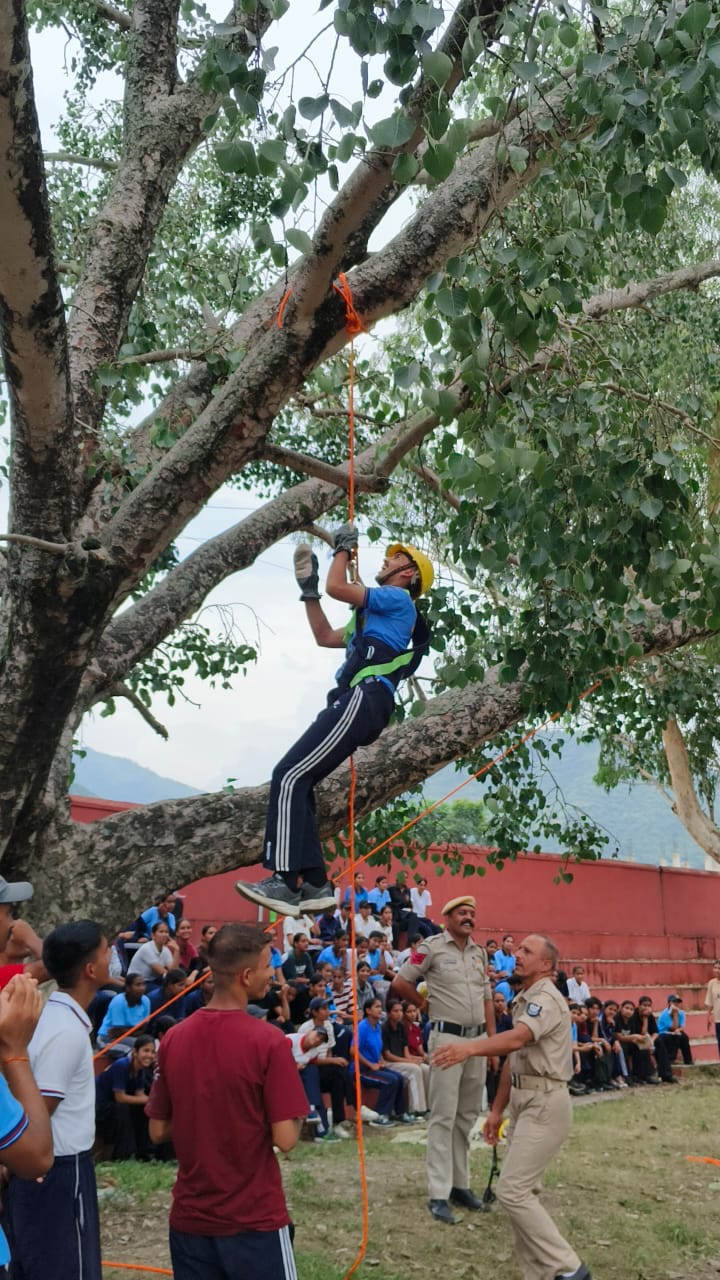
Aapda Mitra geing trained by Fire Department (Photo Courtesy: NDMA)
When Communities Become First Responders
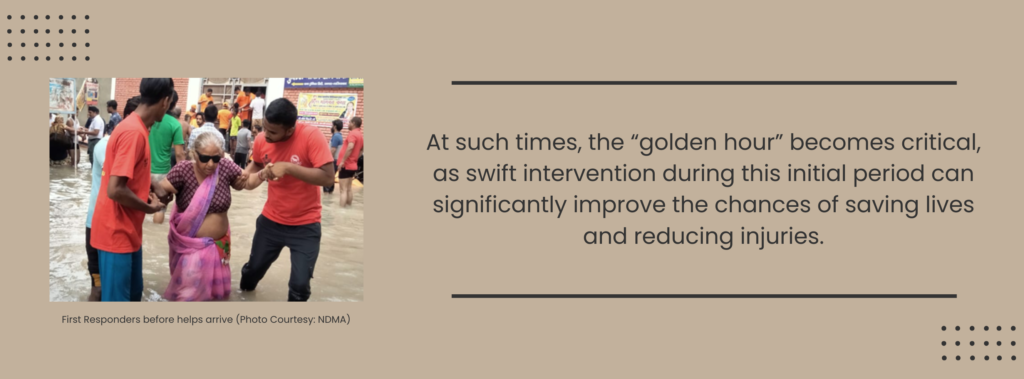
The true value of community preparedness becomes evident when a disaster strikes, and help is yet to arrive. At such times, the “golden hour” becomes critical, as swift intervention during this initial period can significantly improve the chances of saving lives and reducing injuries. Roads may be cut off, communication systems may fail, and external response teams often require time to reach affected areas. In such situations, trained community volunteers become the first line of support. Their familiarity with local terrain, vulnerable households, and community networks often makes them more effective in the immediate aftermath of a disaster than outside responders.
There are many examples from across India where trained community volunteers have played a decisive role during emergencies. The National Disaster Management Authority (NDMA) has pioneered efforts to train communities for disaster preparedness through initiatives such as Aapda Mitra. In flooded districts, volunteers have rescued stranded families using boats and makeshift flotation devices. In mountainous regions, local responders have directed evacuations and assisted professional rescue teams during landslides, flash floods, and Glacial Lake Outburst Floods (GLOFs).
Local communities have also performed exceptionally well in cyclone-affected coastal regions by managing shelters, disseminating warnings, and assisting elderly and vulnerable populations during evacuations. Such examples highlight how community preparedness strengthens disaster response and saves lives during emergencies.
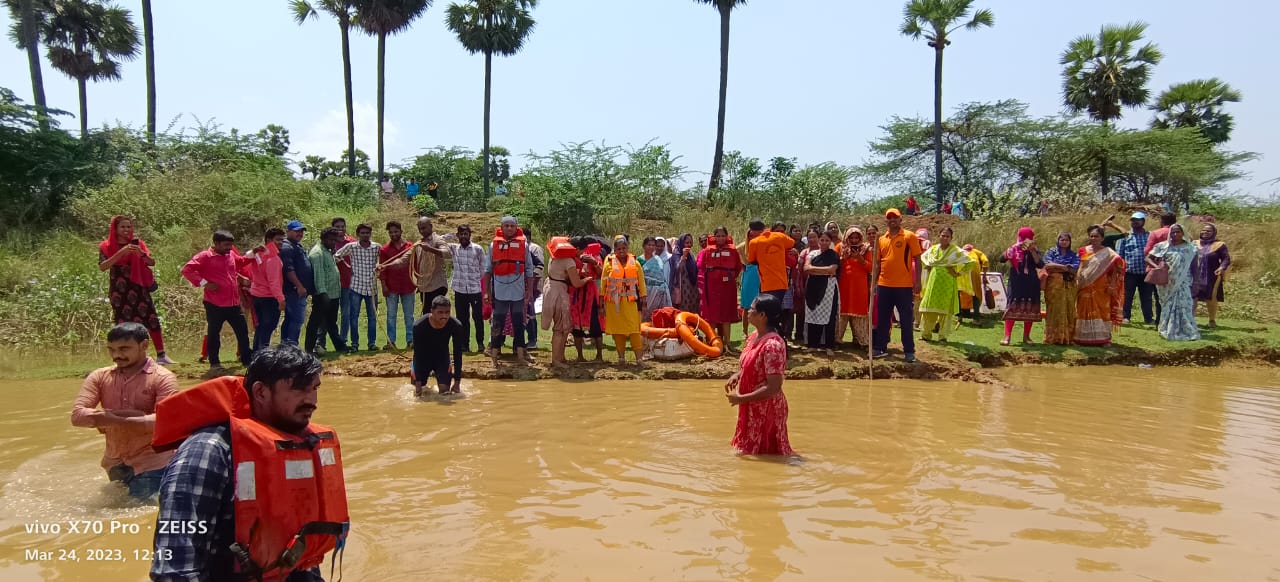
Communities trained on Flood Rescue Techniques Training conducted in Andhra Pradesh, 2023 (Photo Courtesy: NDMA)
Inclusivity as a Pillar of Resilience
Inclusivity is a crucial element of community-based disaster preparedness. The role of women is crucial, as women-led volunteer groups are increasingly essential to resilience, especially in regions where social and cultural barriers hinder evacuation and relief efforts.
Initiatives aimed at engaging kids are proving highly effective in fostering awareness among future generations and integrating disaster preparedness as a civic value and daily practice. Such activities and response systems are rendered more effective, representative, and humane with the inclusion of women, youth, and marginalized communities.
Women in Training for disaster preparedness (Photo Courtesy: NDMA)
Blending Traditional Knowledge with Modern Systems
Numerous instances in India illustrate the integration of ancient wisdom with contemporary disaster management approaches. Conventional techniques, like indigenous architecture, ecosystem-based strategies, and localized, nature-inspired early warning systems, directly enhance contemporary technology disaster management. Communities have long adapted to environmental threats through their deep understanding of river flows, rainfall patterns, topography, forest ecosystems, and seasonal variations, enabling them to anticipate risks and make informed decisions during emergencies.
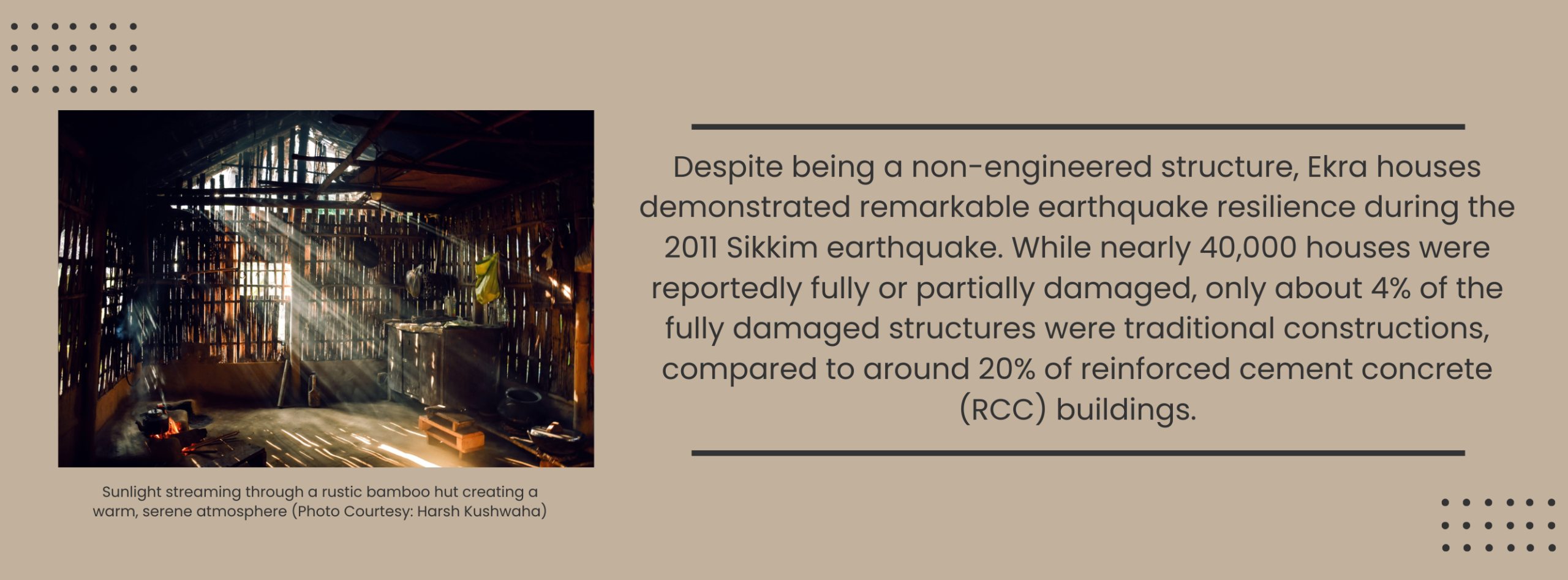
A notable example is the traditional Ekra house of Sikkim, which is built on a stone foundation with bamboo walls plastered with mud or cement (Khawas & Rai 2017). Despite being a non-engineered structure, Ekra houses demonstrated remarkable earthquake resilience during the 2011 Sikkim earthquake. While nearly 40,000 houses were reportedly fully or partially damaged, only about 4% of the fully damaged structures were traditional constructions, compared to around 20% of reinforced cement concrete (RCC) buildings. Reflecting this resilience, a resident of Assamlengy village in East Sikkim remarked, “Ekra house shakes but never falls.” The example highlights how indigenous construction practices, developed through generations of local experience, can complement modern disaster-resilient technologies.
The integration of scientific training, alarm systems, and institutional support can serve as a formidable resource for risk mitigation. The outcome is a more sustainable, community-oriented paradigm of resilience that integrates indigenous wisdom with contemporary readiness.
The Way Forward
Climate change is occurring at an accelerated pace, resulting in a heightened frequency and intensity of extreme weather occurrences. Community resilience is thus no longer an option but a need. Even the most sophisticated response systems can be inundated by large-scale disasters. Empowered local communities produce decentralized capacity that improves the comprehensive disaster management system.
The fundamental lesson is clear: disaster preparedness is most efficacious when individuals are regarded not merely as beneficiaries of assistance but as engaged collaborators in fostering resilience.
As India advances its disaster management systems, community-based preparedness presents a crucial avenue for a safer and more resilient future. Enhancing awareness, promoting volunteerism, fostering inclusive participation, and integrating local knowledge into formal processes can mitigate disaster risks and preserve lives.
Government of India. (2005). Disaster management act, 2005. Ministry of Home Affairs.
National Disaster Management Authority. (2016). Aapda Mitra: Scheme for training of community volunteers in disaster response. Government of India.
National Disaster Management Authority. (2016). Community-based disaster risk reduction: Aapda Mitra operational manual (Institutional manual). Government of India.
National Disaster Management Authority. (2016–2021). Women’s inclusion strategies and role diversification under Aapda Mitra (Gender integration brief). Government of India.
Khawas, V., & Rai, P. (2017). Seismic resistance of vernacular constructions in the Himalaya: Experience from the 2011 Sikkim Himalayan earthquake, 2017. Hill Geographer, 33(2), 119-132.
This blog extracts insights from the publication “Aapda Mitra: Community Volunteering Framework – India’s Model and Way Forward” prepared in collaboration with the National Disaster Management Authority (NDMA). The publication was supported through research, documentation, and knowledge partnership efforts by Sankala Foundation.
Dr Prakash Biswakarma is a geoscientist and remote sensing professional working at the intersection of climate change, disaster risk reduction (DRR), and geohazard assessment. At Sankala Foundation, he brings extensive experience in applied earth system science and DRR using space-based technologies. He holds a Ph.D. in Landslide Studies from Guru Gobind Singh Indraprastha University, New Delhi.